You’re scrolling through a group chat and someone types, “Sorry, been MIA lately, my bad!” No context, no explanation, just three letters that somehow make total sense to everyone except you. If you’ve ever paused mid-scroll wondering what MIA actually means, you’re in good company. This term has quietly become one of the most-used acronyms in modern texting, and it carries a lot more nuance than most people realize.
By the end of this guide, you’ll know exactly what MIA means, where it came from, how it’s used across texting and social media, and how it differs from similar terms like ghosting and AFK. Let’s clear it up.
What Does MIA Mean? (Spoiler: It’s Not Just for Soldiers)
MIA stands for “Missing in Action.”
At its core, MIA is an acronym that describes someone who has disappeared — from a conversation, a group chat, social media, or even real life — without explanation or warning.
In everyday texting, saying someone “went MIA” means they stopped responding, went quiet, or vanished temporarily. The tone can be playful (“Where’d you go? You’ve been MIA all weekend!”) or genuinely concerned (“She’s been MIA for three days — is everything okay?”). Context is everything.
Quick Definition: MIA = Missing in Action → Someone who has disappeared from contact or communication, temporarily or without notice.
From War Zones to WhatsApp: How MIA Went Viral?
The phrase “Missing in Action” has deep roots. It dates back to military classification systems used to track soldiers who couldn’t be accounted for after combat — their status unknown, their fate unclear. The term gained widespread civilian awareness following the Vietnam War, when MIA became a serious social and political issue in the United States.
The journey from battlefield to group chat happened in stages:
- 1910s–1970s: Strictly military usage — solemn, official, and serious
- 1990s–2000s: Internet forums adopt it casually — “OP is MIA, thread is dead”
- 2010s: Social media explosion on Twitter, Facebook, and Instagram normalizes “going MIA”
- 2020s: TikTok and Gen Z culture cement it as everyday vocabulary — memes, trending hashtags, and viral videos
Today, the # TheMIA hashtag has accumulated billions of views on TikTok alone, with creators joking about going MIA during exam season, heartbreaks, or financial dry spells. What started as a grave military term is now internet culture’s favorite way to say, “Where have you been?”
Real-Life Text Examples
Seeing MIA in context makes it much easier to understand. Here are some common scenarios:
Casual texting between friends:
“Hey, you’ve been MIA all weekend. Is everything okay?” “Sorry! Totally went MIA — my family visited, and it got crazy.”
Group chat:
“Where’s Jake? He’s been MIA since Thursday.” “He went MIA after the game, classic Jake.”
Self-referencing (apologizing for absence):
“Sorry I’ve been MIA lately. Work has been insane.”
Playful/romantic tone:
“You’ve been MIA… miss me?”
Gaming context:
“Our squad leader was MIA the whole match — we lost immediately.”
Social media caption:
“Coming back after being MIA for two weeks “
MIA vs. Ghosting vs. AFK: What’s the Difference?
These three terms often get mixed up, but they mean very different things.
| Term | Meaning | Tone | Implied Return? |
| MIA | Missing in Action — absent without explanation | Neutral to playful | Usually yes |
| Ghosting | Deliberately cutting off all contact | Negative, hurtful | No |
| AFK | Away From Keyboard — stepping away briefly | Neutral, informational | Yes |
| AWOL | Absent Without Leave — left without permission | Slightly accusatory | Unclear |
The key psychological difference: MIA assumes the person will come back. Ghosting implies they’ve intentionally cut you off for good. When you call someone MIA, you’re giving them the benefit of the doubt. When you say they ghosted you, you’re not.
AFK is mostly a gaming and work-chat term — you’re announcing a temporary and intentional step away. It’s proactive, whereas MIA usually describes someone else’s unexplained absence.
MIA Meaning Slang Katseye Connection
In recent TikTok trends, you may have seen “MIA” paired with the word Katseye, a K-pop/G-pop group whose fanbase has adopted MIA as part of their online vocabulary. Fans use phrases like “Katseye MIA” when a member hasn’t posted or appeared online in a while, creating playful urgency around the absence.
This niche usage shows how versatile the acronym has become — it’s been fully absorbed into fandom culture, where tracking a favorite artist’s digital presence is part of the fan experience.
MIA Meaning in Work
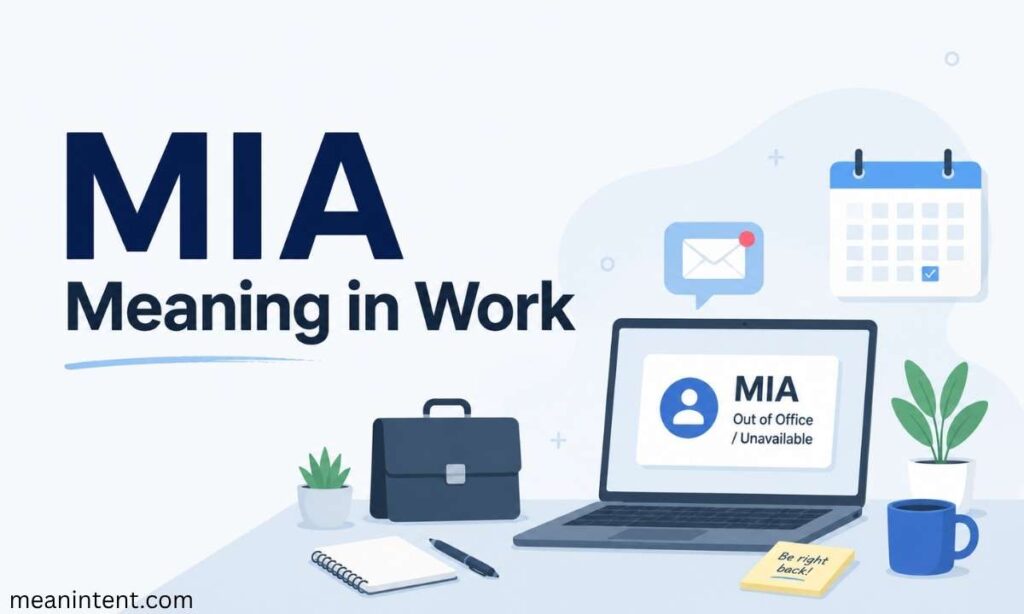
In a professional context, MIA usually describes someone unresponsive during work hours, not replying to emails, missing meetings, or generally unreachable when they’re expected to be available.
Common workplace examples:
- “Can someone loop in Sarah? She’s been MIA since lunch.”
- “The vendor went MIA right before the deadline.”
- “I need you to stop being MIA on this project.”
While casual among coworkers, using MIA about someone in a formal email or performance review can come across as unprofessional or even passive-aggressive. It’s best kept to informal chats, Slack messages, or verbal conversations rather than official documentation.
MIA Urban Dictionary
Crowdsourced slang dictionaries generally define MIA the same way most people use it day-to-day: someone who is absent, unresponsive, or has disappeared from a group, conversation, or social scene without much explanation.
Community-submitted definitions often emphasize the casual, non-alarming tone of the term; it’s used far more often to tease a friend for being quiet than to express genuine concern. That said, context still matters. A single “you’ve been MIA” text is playful; repeated messages with no response might signal real worry.
MIA Meaning in Relationship
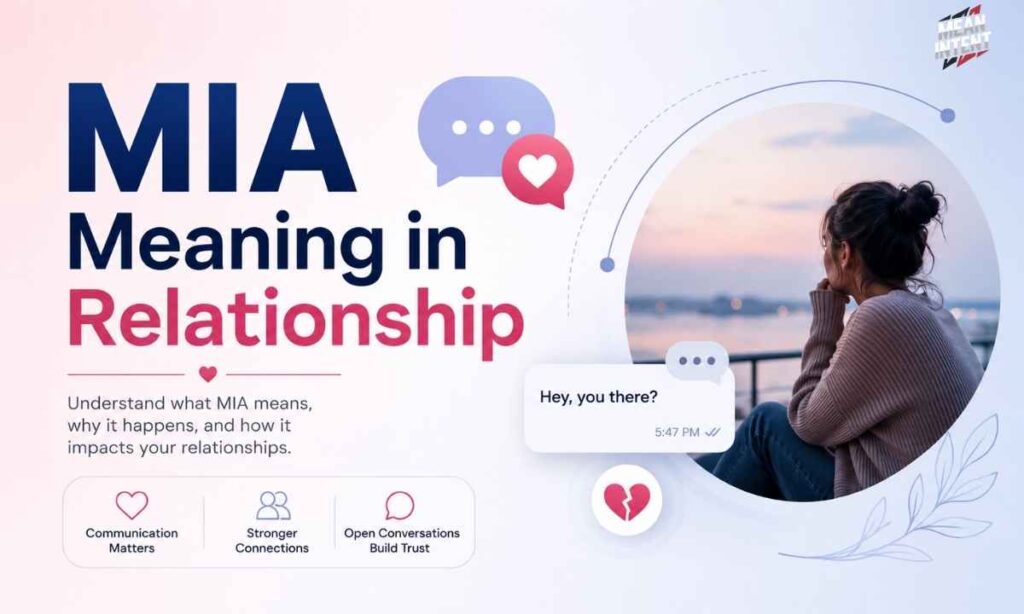
In relationship contexts, MIA carries more emotional weight.
When a partner or love interest goes MIA, it usually means:
- They’ve stopped texting or calling without explanation
- They’ve become less available or emotionally distant
- They’ve pulled back from plans or conversations suddenly
Is MIA the same as ghosting in a relationship?
Not quite. Here’s the important distinction:
- Going MIA might mean they’re overwhelmed, busy, or going through something personal — and they may return
- Ghosting means they’ve made a deliberate choice to disappear and have no intention of coming back
If your partner has been MIA for a day or two, it’s usually worth checking in calmly. If it’s been weeks with zero response, that may be crossing into ghost territory.
Healthy response tip: Don’t spiral. Send one thoughtful message and give it time. “Hey, haven’t heard from you — hope everything’s okay” is enough. You don’t need to send ten texts to prove you care.
How to Respond When Someone Calls You MIA?
Being called out for going MIA happens to everyone. The best response depends on the relationship and vibe:
With close friends (casual):
“Okay, okay, I’ve been MIA — work ate me alive. Let’s catch up this week!”
With humor:
“I was on a top-secret mission. Operation: Survive Monday. Complete.”
In a professional context:
“Apologies for being off the grid — I was heads-down on a deadline. Back now!”
In a relationship:
“I know I dropped off — I’ve been dealing with some stuff. Can we talk?”
What to avoid: A flat “Sorry, I was busy” with no warmth or follow-up. It can come across as dismissive. Add a bit of personality or genuine explanation to keep the connection alive.
MIA Meaning in English
In standard English, MIA (Missing in Action) functions as both an adjective and a phrase:
- Adjective use: “She’s been MIA all week.”
- Phrase use: “He went MIA after the argument.”
- Self-reference: “Sorry for going MIA!”
It’s an acronym that has fully crossed over from formal military classification into informal, everyday language — recognized in most English-speaking countries, including the US, UK, Canada, and Australia.
MIA Meaning in Chat
In chat platforms — whether WhatsApp, iMessage, Discord, or Slack — MIA is one of the most commonly used acronyms for describing absence. Here’s how it shows up across different chat contexts:
- WhatsApp groups: Calling out a friend who hasn’t replied in days
- Discord servers: Noting that a player or moderator hasn’t been online
- Work Slack: (Informal teams only) Joking about a coworker who’s been unreachable
- DMs: Apologizing after a period of silence
In chat, MIA is almost always casual. If a situation is genuinely serious — someone hasn’t been heard from, and you’re worried — plain language is always better than slang.
MIA Around the World (Not Everyone Uses It!)
While MIA is widely understood in English-speaking countries, its usage isn’t universal:
- USA, UK, Canada, Australia: Widely understood and commonly used in informal contexts
- Non-English-speaking countries: Many have their own local slang for disappearing or being absent — direct translations of MIA may not land the same way
- Asian cultures: Some prefer local expressions or emojis to describe absence; the military connotation of MIA can feel too intense in some communities
- Formal or older demographics: May not recognize it as slang at all — stick to plain language to avoid confusion
The rule of thumb: know your audience. If you’re texting a Gen Z friend, MIA is second nature. If you’re messaging someone unfamiliar with internet slang, spell it out or rephrase entirely.
MIA in 2024–2026: Why It’s Bigger Than Ever
Several forces have kept MIA not just alive but thriving:
- Versatility — Works across texts, captions, gaming chats, and casual work conversations
- Meme-friendliness — Short, punchy, and endlessly remixable. “My motivation is MIA,” “My social life has been MIA,” “My ex went MIA — upgrade incoming”
- TikTok momentum — The #MIA hashtag has billions of views; creators make entire video series around going MIA and returning with dramatic “Main Character Energy” edits
- Pandemic residue — During COVID-19 lockdowns, social disappearances normalized, and MIA became the go-to shorthand for unexplained digital absence
- Gen Z adoption — A generation that communicates in acronyms, memes, and shorthand has fully embraced MIA as part of its core vocabulary
Search interest in “MIA meaning” rose significantly between 2020 and 2024, with the highest spikes during lockdowns and the early days of remote work culture.
When NOT to Use MIA
Despite its widespread popularity, MIA isn’t always appropriate. Avoid it in these situations:
- Formal emails or professional communication — Use “unavailable,” “out of office,” or “unresponsive” instead
- Genuinely serious situations — If someone is actually missing and you’re concerned for their safety, use clear, direct language — not slang
- Sensitive conversations — With someone who is emotionally fragile or going through a crisis, “MIA” might feel accusatory
- Cross-cultural or multilingual chats — If you’re unsure whether the other person understands internet slang, skip it
MIA Meaning on Instagram
On Instagram, MIA usually shows up in two ways:
- Captions after a break: “Back after being MIA for a month missed you all” — creators use it to acknowledge a gap in posting
- Comments from followers: “Where have you been?? You’ve been MIA!” — fans use it to express that they noticed and missed someone’s content
It carries a lighter, almost affectionate tone on Instagram — more “we missed you” than “where the heck did you go.”
MIA Meaning on TikTok
TikTok has arguably done more for MIA’s cultural staying power than any other platform. Common TikTok uses include:
- Return videos: Creators post comeback content captioned “Coming back from MIA era “
- Relatable humor: “Me going MIA every time I hit a rough patch” (cue montage)
- Seasonal MIA memes: Jokes about going MIA every winter, every exam season, every heartbreak
- Fan behavior: Asking why a favorite creator or artist has been MIA in comment sections
TikTok thrives on exaggeration, so “going MIA” on the platform has become almost cinematic — dramatic music, glow-up transitions, and comedic narratives about digital disappearances. The format perfectly suits a word that’s short, punchy, and relatable to virtually everyone online.
Frequently Asked Questions
What Does MIA Mean in a Text Message?
MIA stands for “Missing in Action.” It means someone has gone quiet or disappeared from the conversation without any explanation.
Is MIA the Same as Ghosting?
Not exactly. MIA is usually temporary and unintentional, while ghosting means someone deliberately cuts off all contact for good.
Can I Use MIA to Describe Myself?
Yes, absolutely. Saying “Sorry, I’ve been MIA” is a perfectly natural way to apologize after being out of touch for a while.
What Does MIA Mean in a Relationship?
It means your partner or love interest has suddenly gone silent or pulled back without giving any reason. It can feel confusing, but it’s not always intentional.
What Does MIA Mean on TikTok?
On TikTok, MIA describes a creator or user who hasn’t posted or been active for a noticeable stretch of time. Fans often use it in comments to say they’ve missed someone’s content.
Does MIA always mean something bad happened?
No, it’s mostly casual and doesn’t imply danger unless the context suggests real concern.
Is It Okay to Use MIA in Professional Emails?
No, it’s better to avoid it at work. Use clearer terms like “unavailable” or “out of office” instead of casual slang.
What Is the Difference Between MIA and AFK?
AFK means “Away From Keyboard” — it’s a short, planned break, usually in gaming. MIA describes a longer, unexplained absence that others notice after the fact.
Conclusion
MIA is one of those rare slang terms that has genuinely earned its place in everyday language. Born from military tragedy, adopted by internet culture, and turbocharged by TikTok, it’s now the default shorthand for any unexplained digital disappearance — serious or silly, temporary or extended.
Whether you’ve been the one calling someone out for going MIA or sheepishly apologizing for your own vanishing act, now you’ve got the full picture. Use it in the right context, read the vibe, and remember: MIA usually means they’ll be back. Ghosting means they won’t.

John Marvel is a passionate writer with 4 years of experience exploring words and ideas. He runs an engaging blog focused on the meaning niche, where he dives deep into the origins, interpretations, and insights behind everyday terms. John loves making complex concepts simple and interesting for his readers. His curiosity drives him to uncover hidden stories and meanings that spark thought and conversation.