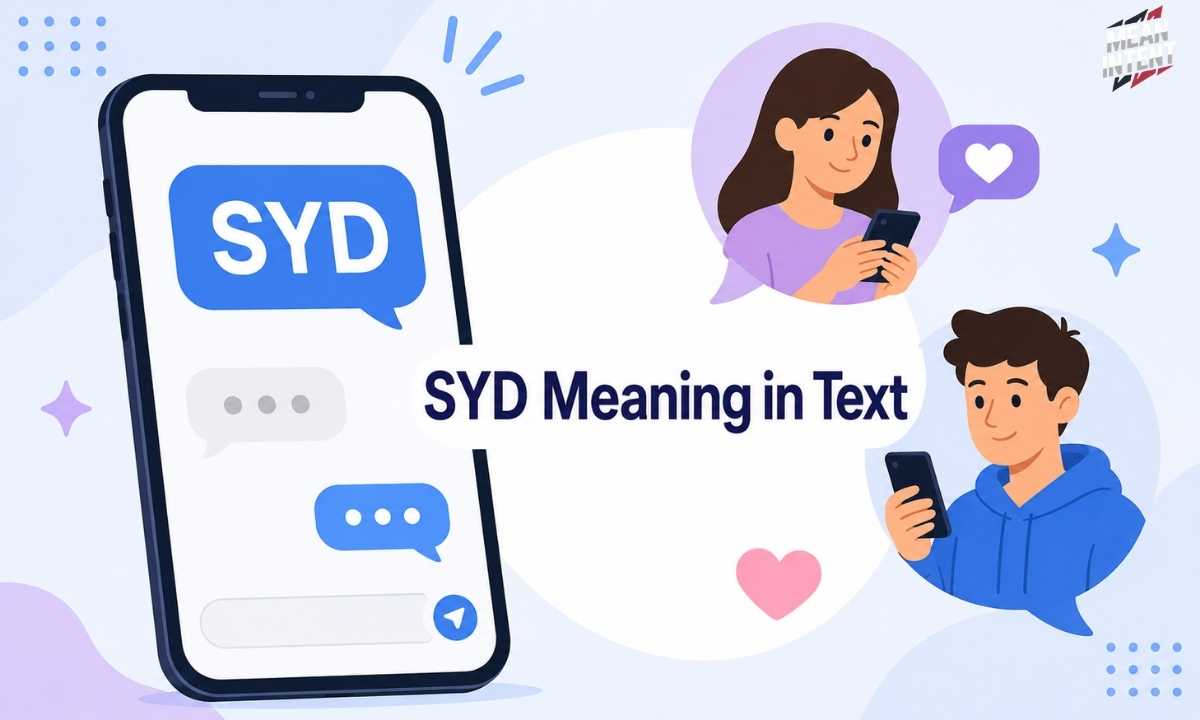
Ever received a message ending with “SYD” and paused mid-scroll wondering what it meant? You’re not alone. Internet slang moves fast, and three-letter acronyms like SYD can mean wildly different things depending on who’s texting, what platform you’re on, and the tone of the conversation.
Whether someone’s saying goodbye, expressing affection, cracking a joke, or referencing a city — SYD covers all of it. This complete guide breaks down every meaning, context, and nuance so you never have to guess again.
What Does SYD Mean in Text? (Definition & Meaning)
SYD is a versatile texting acronym with several accepted meanings. The most widely used interpretations include:
| Meaning | Full Form | Common Context |
| See You Dear | SYD | Casual farewell between close friends or partners |
| See You Soon | SYD | Quick goodbye in everyday chats |
| Sydney | SYD | Travel posts, airport references, Australian slang |
| Shut Your Door | SYD | Gaming chats, humorous use among friends |
| Stop Your Drama | SYD | Gen Z slang, sarcastic or playful use |
| Seek Your Dreams | SYD | Motivational or self-help communities |
The golden rule: context is everything. The same three letters can express warmth, humor, or location depending on the relationship, platform, and tone of the conversation.
Background & History of SYD
The origin of SYD as a texting abbreviation traces back to the early 2000s, when SMS messaging exploded in popularity. Character limits were tight, so people naturally shortened common phrases. “See You Soon” became SYD the same way “Talk To You Later” became TTYL.
The Sydney connection came from aviation — SYD is the official IATA airport code for Sydney Kingsford Smith Airport in Australia. As social media and travel blogging took off, travelers started tagging locations with the shorthand, and it bled naturally into everyday digital conversation.
“Shut Your Door” and “Stop Your Drama” are more recent additions, likely born in online gaming communities and Gen Z group chats where playful jabs and quick comebacks shape a whole new vocabulary.
Usage in Various Contexts
SYD works across multiple settings, but it lands differently depending on where you use it.
Texting and WhatsApp The most common home for SYD. Used as a warm sign-off between friends or romantic partners: “Heading out now, SYD! “
Instagram and TikTok On these platforms, SYD can appear in captions, comments, or DMs. Travel influencers use it to reference Sydney, while others drop it as a casual farewell or reaction in comments.
Snapchat SYD shows up in streaks, story replies, and private chats. Depending on the emoji that follows, it can read as affectionate or playful.
Online Gaming In gaming lobbies and Discord servers, “Shut Your Door” or “Stop Your Drama” pops up when teammates need someone to quiet down or stop overreacting.
Dating Apps SYD adds a touch of personality and warmth without coming across as too intense. A casual “SYD 😊” at the end of a good conversation signals friendly interest.
Common Misconceptions & Clarifications
There are a few myths about SYD worth clearing up:
- Myth: SYD only means one thing. Reality: It has at least five recognized meanings — context determines which one applies.
- Myth: SYD is always casual and friendly. Reality: “Shut Your Door” can come across as dismissive if used with someone unfamiliar with the slang.
- Myth: Everyone will understand SYD. Reality: Older generations and people outside tech-savvy communities may not recognize the abbreviation at all.
- Myth: SYD is only used in Australia. Reality: It’s used globally, though Australians are more likely to read it as a city reference first.
SYD Meaning in Relationships
Between romantic partners or close friends, SYD almost always takes on its warmest meaning: See You Dear. It’s a quick, affectionate sign-off that adds a personal touch without being over the top.
Think of it as the digital equivalent of waving goodbye with a smile. It signals closeness, familiarity, and the expectation of meeting again soon.
Examples in a relationship context:
- “Had an amazing night with you. SYD tomorrow ❤️”
- “Miss you already. SYD soon! 😘”
- “Running late but on my way. SYD at 10!”
In new or casual relationships, SYD can also be a low-pressure way to keep the conversation warm without making things too serious too quickly.
Similar Terms & Alternatives
If SYD doesn’t feel right for a particular situation, here are some alternatives that carry a similar vibe:
| Alternative | Meaning | Best Used When |
| TTYL | Talk To You Later | Casual, all-purpose farewell |
| BRB | Be Right Back | Stepping away temporarily |
| CYA | See You Around | Light, friendly goodbye |
| TTYS | Talk To You Soon | Warmer, more specific than TTYL |
| XOXO | Hugs and Kisses | Close relationships, affectionate tone |
| LMY | Like Missing You | Romantic or close-friend context |
Choose based on how formal the relationship is and how soon you expect to reconnect.
SYD Meaning in Chat
In everyday chat platforms like WhatsApp, Messenger, or iMessage, SYD functions as a quick, friendly goodbye. It’s punchy, recognizable among younger users, and saves time compared to typing out a full farewell.
Here’s how it typically flows:
Person A: “Dinner was so good, we have to do this again.” Person B: “Absolutely! SYD next weekend? 😄” Person A: “100%! Can’t wait. SYD! 👋”
The tone is relaxed and warm. Nobody needs to pause and decode it — it fits naturally into the rhythm of a casual conversation.
How to Respond to SYD?
Responding to SYD is easy once you know the intent behind it. Here are the most natural replies:
- If it means See You Soon/Dear: “SYD! 😊” / “Can’t wait!” / “See you then!”
- If it’s playful or humorous: “Haha, SYD to you too! 😄” / “👋 bye!”
- If you’re not sure: “SYD! (Wait — see you soon or stop your drama? 😂)”
Matching the other person’s energy is key. If they sent a warm SYD with a heart emoji, mirror that warmth. If it came in the middle of playful banter, keep it light.
Regional or Cultural Differences
SYD doesn’t mean the same thing everywhere, and knowing the regional nuance can save you from an awkward misread.
- Australia: SYD almost universally means Sydney — the city, not a farewell. Travel posts, event hashtags, and local references make this clear.
- United States and UK: More likely to be read as “See You Soon” or the Gen Z favorite “Stop Your Drama.”
- Online gaming communities globally: “Shut Your Door” is the dominant meaning in gaming slang circles.
- Gen Z worldwide: “Stop Your Drama” has spread through TikTok and meme culture, making it increasingly recognized outside its original communities.
Comparison with Similar Terms
| Term | Meaning | Formality | Warmth Level |
| SYD | See You Dear/Soon | Very Casual | High |
| TTYL | Talk To You Later | Casual | Medium |
| BRB | Be Right Back | Casual | Low |
| CYA | See You Around | Casual | Medium |
| Cheers | Informal goodbye | Semi-Casual | Medium-High |
| Later | Quick goodbye | Very Casual | Low |
SYD stands out because it carries more warmth than most farewell abbreviations, especially in its “See You Dear” interpretation. It doesn’t just signal the end of a conversation — it signals connection.
Usage in Online Communities & Dating Apps
SYD has found a natural home across online spaces where brief, expressive communication matters most.
On Reddit and Discord, it appears in casual goodbyes during gaming sessions or late-night chat threads. On dating apps like Tinder, Bumble, or Hinge, a well-placed SYD at the end of a good conversation can be a soft, approachable way to wrap things up without the pressure of a formal goodbye.
On TikTok, SYD sometimes appears in comments or video captions as a personality-packed sign-off. Creators use it to build a casual, relatable image with their audience.
Hidden or Offensive Meanings
Like most internet slang, SYD has niche interpretations that are worth knowing — even if they’re not mainstream.
In certain online forums and niche communities, SYD has occasionally been used in ways that carry a dismissive or mildly rude edge, particularly the “Shut Your Door” usage when directed at someone sarcastically. Outside friendly or gaming circles, this version can land poorly.
There’s no widely known explicit or offensive meaning attached to SYD in mainstream use. It remains a generally safe, neutral-to-warm acronym for most everyday contexts.
SYD Meaning in Gen Z
For Gen Z, SYD isn’t just a shorthand — it’s part of a larger, fast-moving slang ecosystem built on TikTok, Instagram, and Discord.
The most Gen Z-flavored meaning is “Stop Your Drama.” It’s typically deployed with a sarcastic or light-hearted edge:
“You’re upset about that? SYD, it’s not even that serious 💀”
Gen Z uses SYD with irony and humor, often paired with emojis like 💀, 😭, or 🙄 to amplify the sarcasm. The generation values brevity and layered meaning, and SYD delivers both.
SYD Meaning Dirty
Let’s address this directly: SYD does not have a widely recognized explicit or sexual meaning in mainstream texting. It is not commonly used as coded language in sexting or adult conversations.
In rare or highly niche online spaces, any acronym can be repurposed with adult intent — but this is not a standard interpretation of SYD. If you encountered it in an ambiguous context, the far more likely meaning is “See You Dear,” “See You Soon,” or a regional reference to Sydney.
When in doubt, consider the tone, relationship, and platform before jumping to conclusions.
SYD Meaning in Text on Snapchat
On Snapchat specifically, SYD tends to appear in streak messages, story replies, or casual DM exchanges. Given Snapchat’s informal culture and younger user base, the most common meanings are:
- See You Soon — wrapping up a conversation before disappearing (fitting for Snapchat’s ephemeral format)
- See You Dear — especially between close friends maintaining a streak
- Stop Your Drama — in a playful back-and-forth
Emojis are the biggest clue on Snapchat. A 🔥 or 💛 next to SYD signals warmth and closeness. A 😂 or 💀 tips you off that it’s being used humorously.
Suitability for Professional Communication
Short answer: proceed with caution.
SYD is casual internet slang. It’s at home in friend group chats, social media, and dating apps — not in work emails, client messages, or formal documents.
When it might be okay:
- Long-term colleagues with an established casual rapport
- Internal team messaging apps like Slack (in a lighthearted channel)
- Creative or startup environments with informal communication norms
When to avoid it:
- First-time professional contacts
- Client-facing emails or messages
- Any context where professionalism or clarity is expected
If you’re ever unsure, write it out in full. “See you soon!” is always safe. “SYD” could leave someone confused — or worse, unimpressed.
Frequently Asked Questions
What does SYD mean in a text message?
SYD most commonly means “See You Dear” or “See You Soon” — a casual, warm goodbye used in everyday texting.
Is SYD always friendly?
Generally yes, though “Shut Your Door” can feel dismissive outside familiar or gaming contexts.
What does SYD mean on Snapchat?
On Snapchat, SYD usually means See You Soon or See You Dear, depending on context and accompanying emojis.
Does SYD have a dirty meaning?
No — SYD does not carry a recognized explicit meaning in mainstream use.
What does SYD mean in Gen Z slang?
Gen Z often uses SYD to mean “Stop Your Drama” — typically in a sarcastic, humorous way.
Can I use SYD professionally?
It’s best avoided in formal or professional settings; stick to full phrases in those contexts.
Conclusion
SYD is one of those rare acronyms that does a lot of heavy lifting in a few characters. Whether someone’s saying goodbye with warmth, joking around in a gaming lobby, referencing a city, or rolling their eyes at drama — this three-letter shorthand adapts to the moment.
The key takeaway? Read the room. Look at the platform, the relationship, the tone, and the emojis before landing on a meaning. Once you get the hang of it, SYD becomes a natural part of your digital vocabulary.

John Marvel is a passionate writer with 4 years of experience exploring words and ideas. He runs an engaging blog focused on the meaning niche, where he dives deep into the origins, interpretations, and insights behind everyday terms. John loves making complex concepts simple and interesting for his readers. His curiosity drives him to uncover hidden stories and meanings that spark thought and conversation.