In today’s digital world, abbreviations and internet slang dominate online conversations. One abbreviation that often confuses people is JS. Whether you’ve seen it on WhatsApp, Instagram, TikTok, Snapchat, or during casual texting, understanding the JS meaning in text can help you avoid misunderstandings and communicate more naturally.
This complete guide explains what JS means in text and chat, its origins, various meanings, usage examples, and how people use it across social media platforms.
What Does JS Mean in Text & Chat?
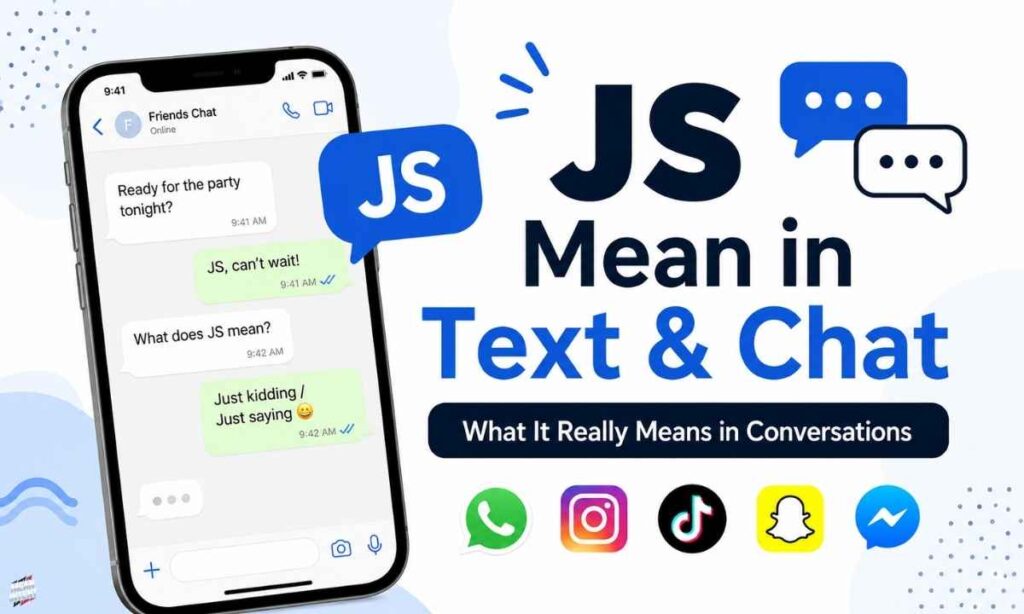
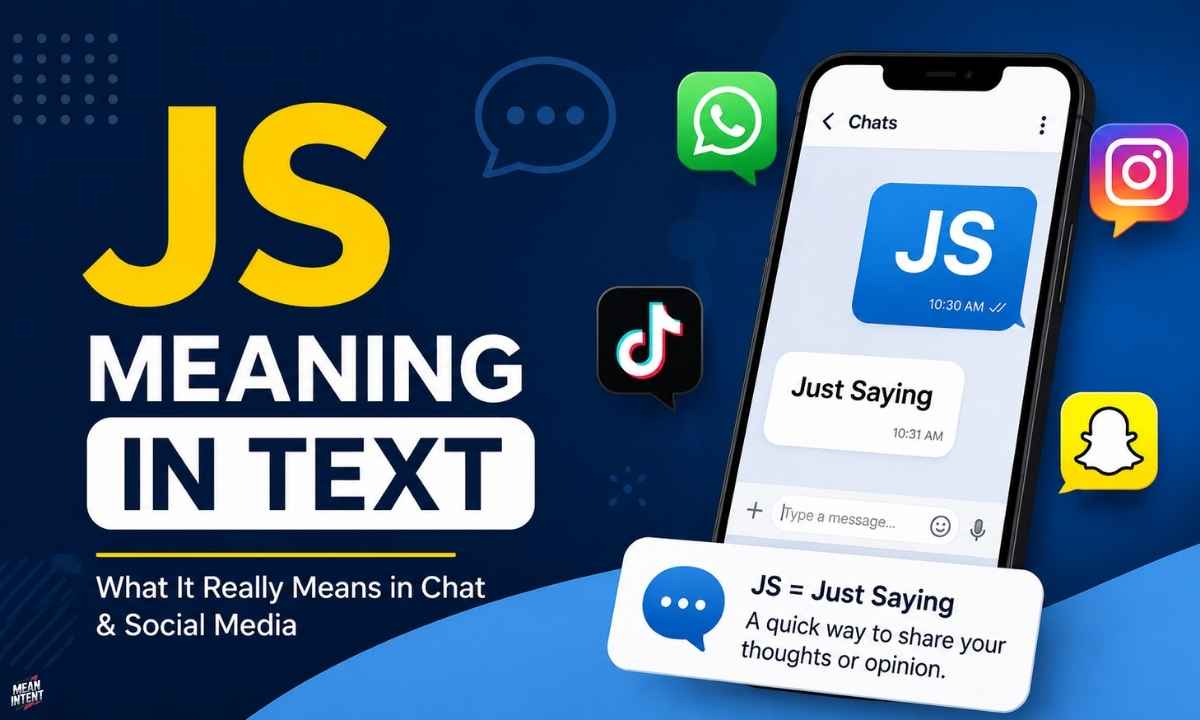
In most everyday texting, JS stands for “just saying.” People use it to soften a comment, add a casual opinion, or clarify that they weren’t trying to start an argument.
It’s the digital equivalent of a shrug — a way to drop a thought into the conversation without sounding too pushy or confrontational.
JS Meaning in Chat
In chat apps and social media comment sections, JS usually appears at the end of a sentence, almost like a disclaimer. Someone might type: “you left me on read for 3 days js,” meaning they’re pointing out a fact, but keeping the tone light rather than accusatory.
Full Form, Stands For & Short Meaning of JS
- JS most commonly stands for “Just Saying” in text messages and online chats.
- It is used to express an opinion, suggestion, or observation without sounding too direct.
- JS = Just Saying is widely used on WhatsApp, Instagram, TikTok, Snapchat, and texting apps.
- The abbreviation helps soften criticism or advice in conversations.
- In other contexts, JS can also stand for JavaScript, Junior School, Job Satisfaction, or Judicial Service.
- The exact meaning of JS depends on the context of the conversation.
- Among internet slang terms, “Just Saying” remains the most popular and widely recognized meaning of JS.
Origin, History & First Known Use of JS
The abbreviation JS, meaning “Just Saying,” emerged during the early days of internet chat rooms and SMS texting in the late 1990s and early 2000s.
As texting became more popular, users began shortening common phrases to save time and character space. Similar abbreviations such as:
- IMO (In My Opinion)
- TBH (To Be Honest)
- FYI (For Your Information)
- BTW (By The Way)
also gained popularity during this period.
The widespread adoption of smartphones, social media platforms, and messaging apps helped JS become a commonly recognized internet slang term worldwide.
How Do People Use JS in Daily Conversations?
People typically use JS when they want to:
- Give advice
- Share opinions
- Point out facts
- Offer criticism politely
- Add personal observations
- Avoid sounding too serious
Common usage styles:
- Friendly suggestions
- Casual opinions
- Light criticism
- Humor or sarcasm
- Relationship discussions
- Social media comments
Texting examples:
- “You should call her first, JS.”
- “That movie wasn’t worth the money, JS.”
- “Maybe leave earlier next time, JS.”
- “The food tastes better at that restaurant, JS.”
- “You deserve better treatment, JS.”
JS Meaning Across WhatsApp, Instagram, TikTok & Snapchat
- WhatsApp: JS usually means “Just Saying” and is used to give advice, opinions, or casual comments in personal chats.
- Instagram: Users often write JS in captions and comments to share thoughts, observations, or light criticism.
- TikTok: JS appears in video captions, reactions, and comment sections to express opinions or humorous remarks.
- Snapchat: On Snapchat, JS is commonly used in private conversations and stories to add a casual opinion or suggestion.
Different Meanings of JS in Other Fields
Although “Just Saying” is the most popular meaning in texting, JS has several alternative meanings.
| Field | Meaning |
| Programming | JavaScript |
| Education | Junior School |
| Business | Job Satisfaction |
| Medicine | Joint Space |
| Religion | Jesus Saves |
| Sports | Jersey Size |
| Government | Judicial Service |
The intended meaning depends entirely on the conversation’s context.
Common Confusions, Mistakes & Wrong Interpretations
Many people misunderstand JS because it has multiple definitions.
Common mistakes include:
- Assuming JS always means JavaScript
- Confusing JS with “Just Kidding (JK)”
- Thinking JS refers to someone’s initials
- Misinterpreting sarcastic uses
- Applying business meanings to social media conversations
For example:
“You should apologize, JS.”
Here, JS means “Just Saying,” not JavaScript.
Similar Terms, Alternatives & Related Slang
Several internet abbreviations have meanings similar to JS.
| Slang | Meaning |
| IMO | In My Opinion |
| TBH | To Be Honest |
| FYI | For Your Information |
| NGL | Not Gonna Lie |
| TBF | To Be Fair |
| ICYMI | In Case You Missed It |
| SMH | Shaking My Head |
These expressions help soften opinions or provide additional context in conversations.
Examples of JS Meaning in Real Chat Situations
In real-life conversations, JS (Just Saying) is commonly used to express opinions, give advice, or make observations without sounding too serious or confrontational. The following examples show how people naturally use JS in text messages, social media comments, and everyday online chats.
Example 1
Friend 1: I’m thinking of quitting my job.
Friend 2: You should find another job first, JS.
Example 2
Person A: I spent $500 on shoes.
Person B: That seems expensive, JS.
Example 3
Friend: Should I text him again?
You: Maybe wait a few hours, JS.
Example 4
Instagram Comment:
“This is probably your best content yet, JS.”
Example 5
Gaming Chat:
“We should’ve attacked earlier, JS.”
JS Meaning in Text Spanish
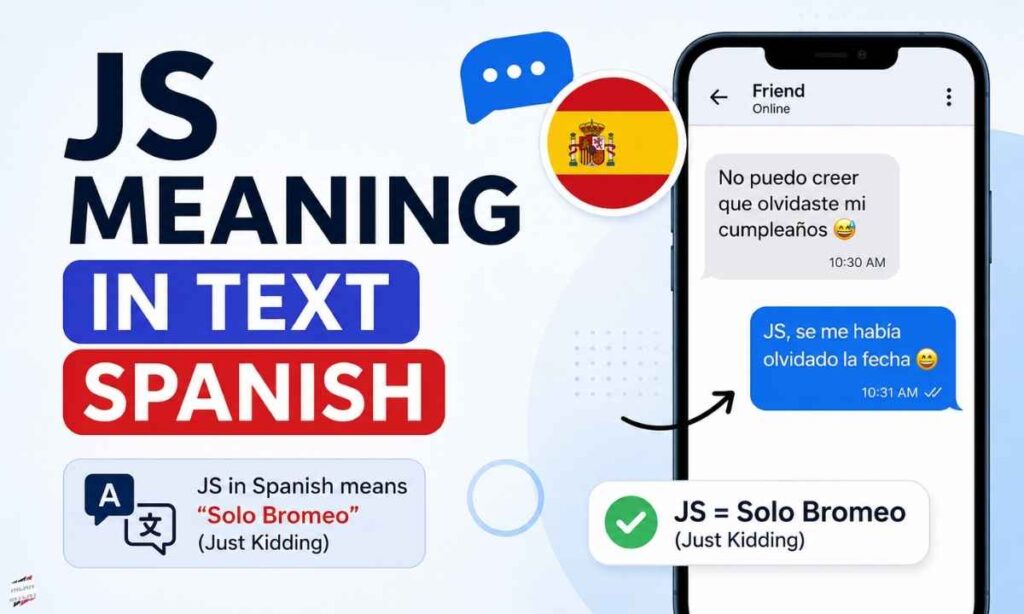
In Spanish-speaking online communities, JS can still mean “Just Saying,” especially among bilingual users and younger internet audiences.
However, Spanish speakers may also use equivalent phrases such as:
- Solo digo
- Solo estoy diciendo
- Nada más digo
Example:
“Creo que deberías descansar, solo digo.”
This translates to:
“I think you should rest, just saying.”
JS Meaning in School
In educational settings, JS often stands for:
- Junior School
- Junior Student
- Job Skills
- Journal Studies
Example:
“The JS department announced new activities.”
In academic conversations, the meaning depends on the school’s terminology.
JS Meaning in Text From a Guy
When a guy uses JS in texting, it usually means:
- Giving advice
- Sharing an opinion
- Expressing concern
- Offering criticism gently
- Hinting at feelings
Examples:
- “You deserve someone better, JS.”
- “I think you’re overthinking this, JS.”
- “You looked great yesterday, JS.”
In many cases, the phrase helps soften the message and avoid conflict.
JS Urban Dictionary
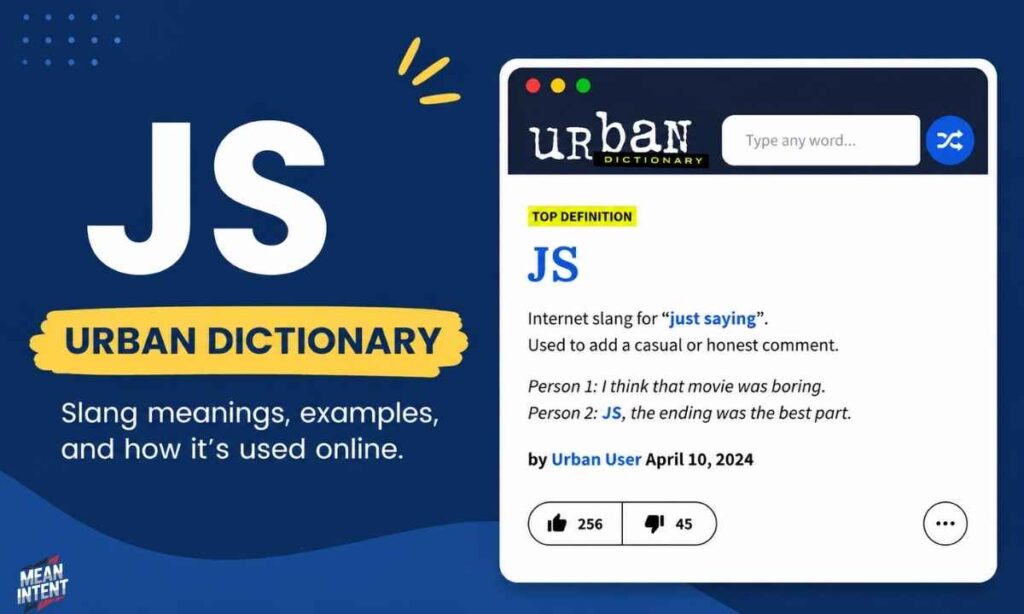
According to internet slang communities and popular online definitions, JS is primarily recognized as:
“Just Saying”
The term is frequently used after expressing opinions, criticism, observations, or advice to reduce the seriousness or bluntness of a statement.
Examples commonly found in internet slang culture include:
- “You should’ve listened earlier, JS.”
- “That wasn’t your best decision, JS.”
JS Meaning in English
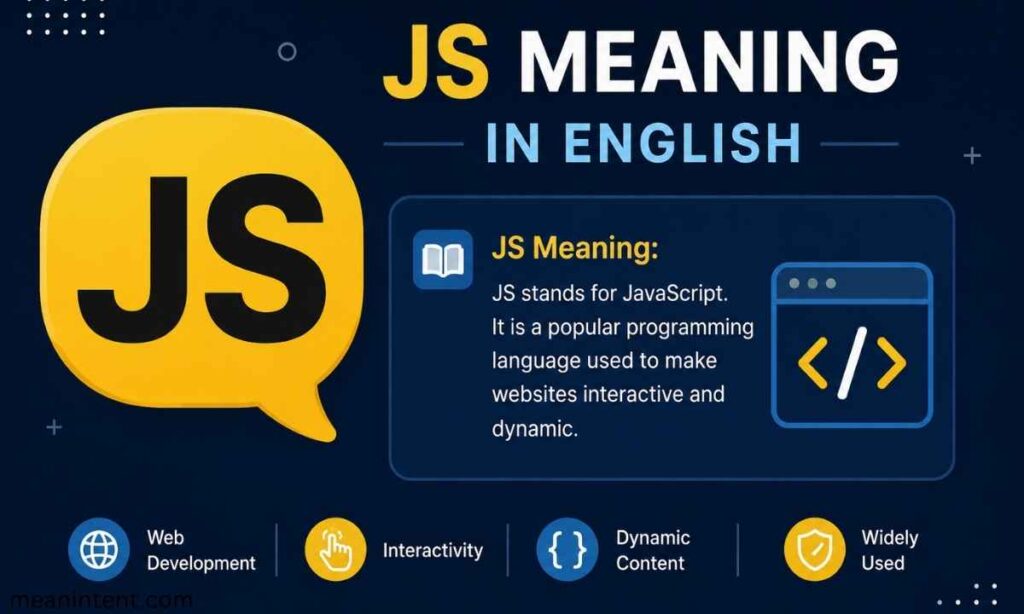
In general English writing or speech, “JS” isn’t a standard abbreviation — it only appears in informal writing as shorthand for “just saying,” matching its texting use.
JS Meaning in Relationship
In relationships, JS often appears when someone wants to express emotions carefully.
Examples include:
- Giving relationship advice
- Pointing out red flags
- Expressing jealousy
- Showing concern
- Offering emotional support
Examples:
“He doesn’t treat you well, JS.”
“You both should communicate more, JS.”
“I think you deserve better, JS.”
How to Reply When Someone Says JS?
Your response depends on the tone and context.
Casual replies:
- “Maybe you’re right.”
- “I’ll think about it.”
- “Good point.”
- “Fair enough.”
Funny replies:
- “Thanks, life coach.”
- “I’ll add that to my therapy notes.”
- “Noted, professor.”
- “Okay, philosopher.”
Friendly replies:
- “I appreciate your advice.”
- “Thanks for being honest.”
- “That’s actually helpful.”
- “I understand what you mean.”
Formal replies:
- “Thank you for your input.”
- “I appreciate your perspective.”
- “I’ll consider your suggestion.”
- “Thank you for sharing your opinion.”
Is JS Still Popular? Trends & Online Usage
Yes, JS remains popular in texting and social media, although its usage varies by age group and platform.
Current trends show that:
- Millennials frequently use JS.
- Gen Z users still recognize it.
- TikTok and Snapchat users occasionally use it.
- WhatsApp conversations commonly include it.
- Gaming communities continue using it regularly.
While newer slang terms appear constantly, JS’s meaning in text remains widely understood across online platforms.
Quick Facts Section
| Question | Answer |
| Most common meaning of JS | Just Saying |
| Is JS internet slang? | Yes |
| Is JS still popular? | Yes |
| Used on social media? | Yes |
| Can JS mean JavaScript? | Yes |
| Is JS used in relationships? | Frequently |
| Is JS formal? | Usually informal |
| Popular among Gen Z? | Moderately |
Frequently Asked Questions
What does JS mean in texting?
JS usually means “Just Saying,” which people use to share opinions or advice casually.
Does JS always mean Just Saying?
No. JS can also mean JavaScript, Junior School, Job Satisfaction, and other terms depending on context.
Is JS rude?
No. It’s often used to soften criticism or opinions rather than sound rude.
What does JS mean on Snapchat?
On Snapchat, JS generally means “Just Saying.”
What does JS mean from a guy?
Usually, it means he’s sharing an opinion, giving advice, or expressing concern.
Is JS still popular in 2026?
Yes. JS continues to be recognized and used across messaging apps and social media.
What is the Spanish meaning of JS?
Spanish speakers often interpret JS as “Just Saying,” similar to phrases like “Solo digo.”
Is JS slang appropriate in formal writing?
No, JS should be avoided in formal writing; use the full phrase “just saying” or omit it entirely.
Conclusion
The JS meaning in text most commonly stands for “Just Saying.” It is used across text messages, WhatsApp, Instagram, TikTok, Snapchat, and other social platforms to express opinions, suggestions, or criticism in a softer and more casual way.
However, context matters because JS can also represent JavaScript, Junior School, Job Satisfaction, and other terms depending on the conversation. Understanding the surrounding discussion helps you determine the correct meaning every time.

John Marvel is a passionate writer with 4 years of experience exploring words and ideas. He runs an engaging blog focused on the meaning niche, where he dives deep into the origins, interpretations, and insights behind everyday terms. John loves making complex concepts simple and interesting for his readers. His curiosity drives him to uncover hidden stories and meanings that spark thought and conversation.