You open your phone and see a message that just says “wya.” No context. No emoji. Just three letters.
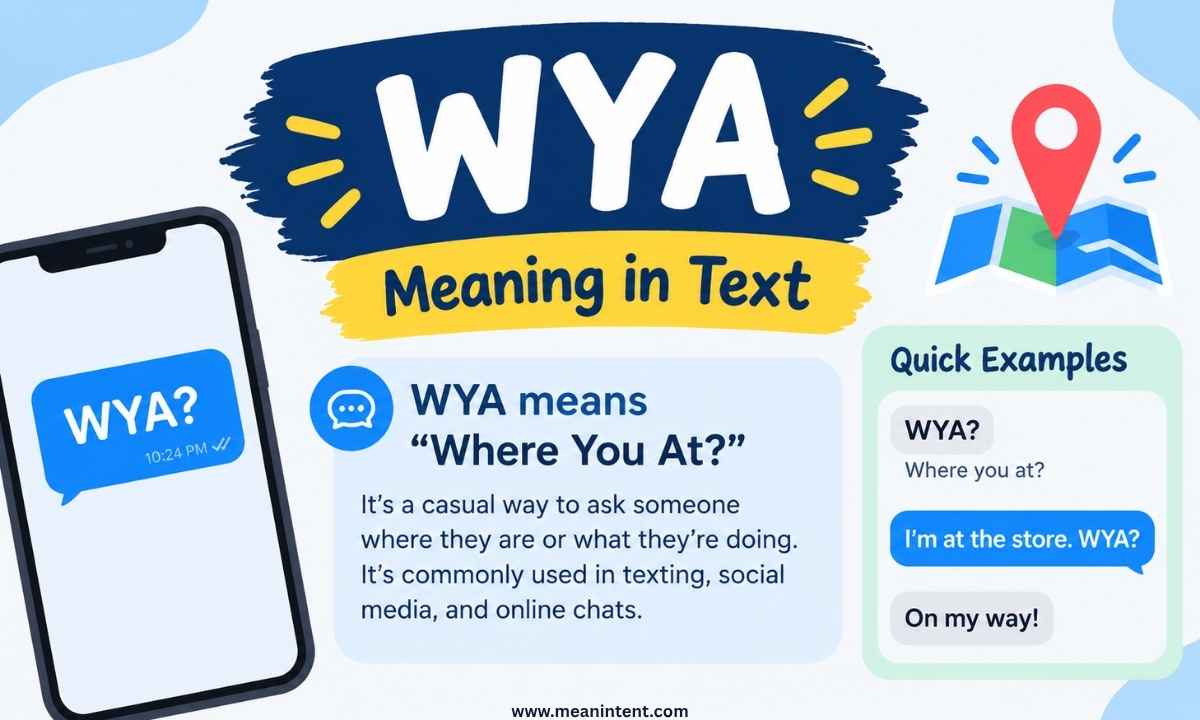
Don’t worry. This slang is simple once you know the context. In short, WYA means “where you at?” It’s a quick way to ask someone’s location.
This guide covers the full WYA meaning in text, how it’s used on social media and in games, what it means when a guy or girl sends it, and how to reply without awkwardness.
What Does WYA Mean?
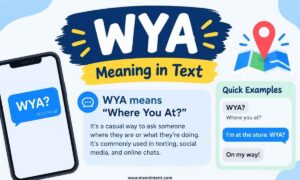
WYA means “where you at?” People send it to find out where someone is right now.
It’s casual, fast, and mostly used between friends, classmates, and people who text often. The tone depends on who sends it and when.
What Does WYA Stand For?
WYA is an acronym for “where you at?”
- W = Where
- Y = You
- A = At
Good to know:
- It’s usually typed in lowercase, with or without a question mark.
- A rare alternate meaning is “what you about?”, but it’s rarely used.
What Does WYA Mean in Texting?
In texting, WYA is a location check. It works like a shortened “Where are you right now?”
People usually send it when they:
- Are waiting to meet someone
- Are running late and want an update
- Want to know if you’re free to hang out
- Are arriving at a party, café, or event
- Want to check if you’re home or out
The abbreviation grew out of African American Vernacular English (AAVE) and spread through hip-hop, text culture, and social media. Today it’s part of everyday internet slang across the US, UK, Canada, and beyond.
How Do People Use WYA?
Most people use WYA in three ways.
- As a direct question. “wya? I’m outside.”
- As a conversation starter. A short “wya” can open a chat when someone wants to talk or meet.
- As a statement with context. “I’m here, wya?”
Tone matters. A quick “wya” from a friend is practical. The same word from a crush at 11 p.m. may carry more meaning.
WYA Meaning on Social Media
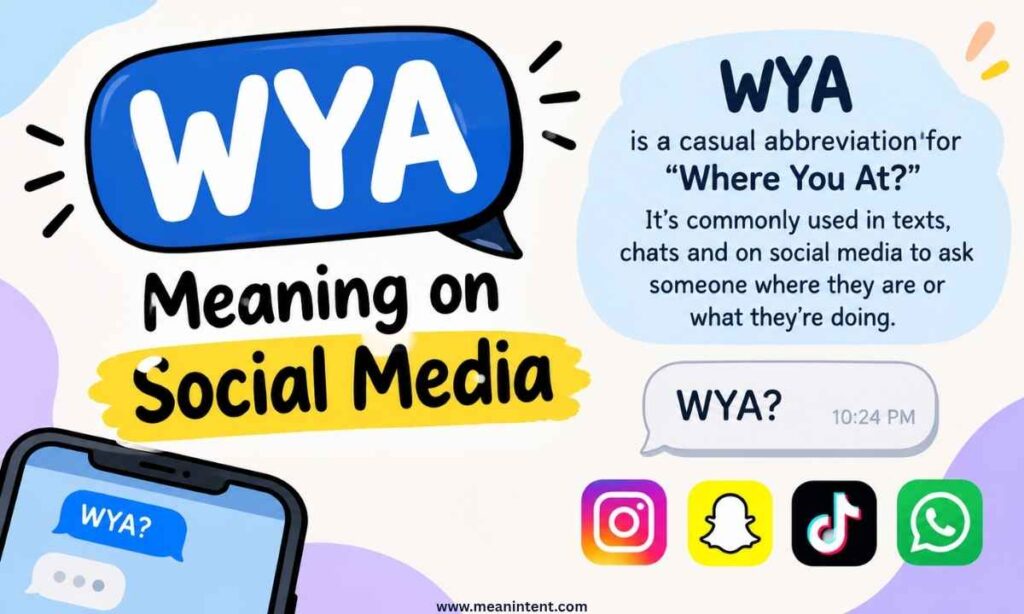
On Instagram, Snapchat, TikTok, and X (Twitter), WYA shows up in direct messages, comments, and captions.
- Snapchat: Friends send “wya” to see who’s free to hang out.
- Instagram DMs: Often a reply to a story where you’re clearly out somewhere.
- TikTok comments: Used jokingly, like “wya when this song came out?”
- Captions: “wya tonight? 👀” invites followers to show up or join a plan.
Online, it can also be playful. People tag friends under party posts with “wya” to say “why aren’t you here?”
WYA Meaning in Text From a Guy (Flirty)
When a guy texts “wya,” the meaning depends on timing and your relationship.
How to read it:
- Daytime, between friends: Simple location check
- Late at night: He may want to see you or hang out
- After flirty chats or compliments: He’s interested and testing the vibe
- Followed by “come through” or “let’s link”: He’s making a plan
- Sent with 😏 or 👀: Flirty or hinting at something more
Signs it’s flirty:
- He texts you at night, often when he’s alone
- He uses emojis or a teasing tone
- He’s been complimenting you lately
- He asks things like “what are you doing later?”
Signs it’s casual:
- He sends it in a group chat
- It’s about a specific plan, like lunch
- He texts you the same way as everyone else
Tip: Look at the pattern, not one message. If he checks in often and makes effort, the interest is probably real.
WYA Meaning From a Girl
When a girl sends WYA, it follows the same rule: context decides.
Common meanings include:
- Friendly check-in: She wants to know where you are before meeting.
- Impatience: “wya??” with extra question marks often means “you’re late.”
- Interest: If she texts it first and keeps the chat going, she may want to spend time with you.
- Curiosity: She may just be wondering what you’re up to.
Girls and guys use WYA the same way. The difference is in the tone, the relationship, and the extra clues around the message.
WYA Meaning in Among Us
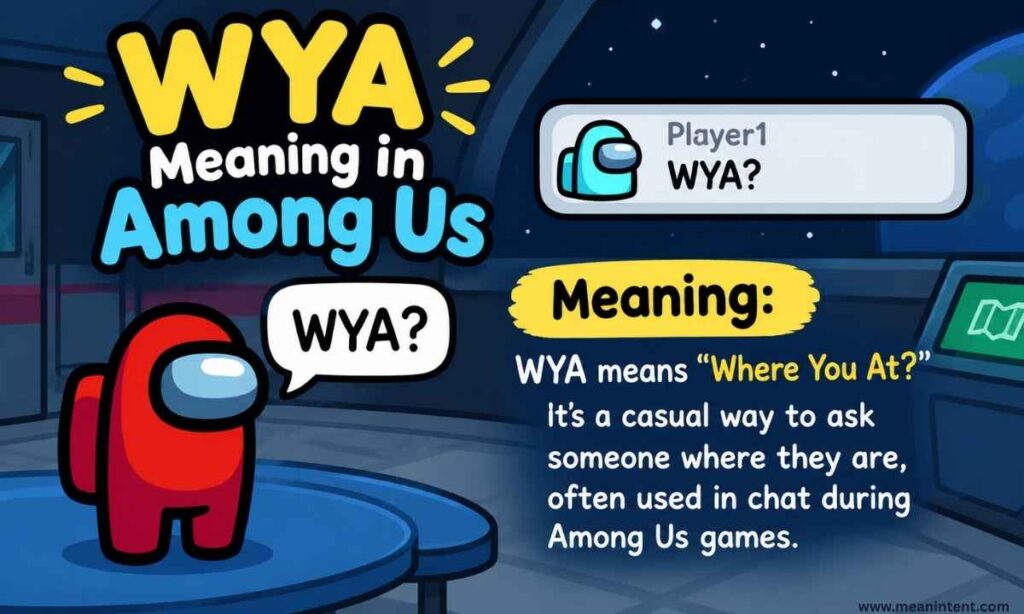
In Among Us, WYA is practical, not romantic. Players type it in chat to ask where another player is on the map.
Examples:
- “wya? I’m in electrical.”
- “wya when the lights went out?”
It matters most during meetings, when crewmates are trying to figure out who’s lying. Answering with a clear location (cafeteria, medbay, navigation) makes you look trustworthy. A vague or missing answer can make you look suspicious.
The same use shows up in other online games like Roblox, Fortnite, and Valorant when teammates need to find each other.
Examples of WYA in Conversations
Example 1: Meeting up
- Friend: wya?
- You: Parking lot, 2 mins away.
Example 2: Running late
- Her: wya?? We’re waiting 😭
- You: omw, traffic is crazy
Example 3: Flirty chat
- Him: wya tonight?
- You: Home, why? 😏
Example 4: Gaming
- Teammate: wya
- You: B site, come help
Example 5: Group chat
- Friend: wya guys, the movie starts soon
- You: Just parked
How to Reply to WYA
Your reply should match your comfort level and the situation.
Simple replies:
- “At home.”
- “On my way.”
- “Just left work.”
- “At the mall, you?”
Flirty replies:
- “Why, you miss me? 😏”
- “Thinking about you. wya?”
- “Depends. Where do you want me to be?”
When Should You Use WYA?
WYA works best in relaxed, informal settings.
Use it when:
- Texting close friends or family
- Meeting someone at a busy place
- Playing online games
- Chatting in casual social media DMs
- Flirting lightly with someone who texts the same way
It saves time. When you’re moving and typing fast, three letters beat a full sentence.
When You Should Avoid Using WYA
Skip it when the setting is formal or when clarity matters.
- Work emails or professional chats: Use “Where are you right now?” instead.
- Messages to teachers or bosses: It can seem disrespectful.
- Talking to older relatives: They may not understand the slang.
- First message to someone new: It can feel abrupt or pushy.
- Serious situations: If you’re worried about someone’s safety, be clear and direct.
Common Mistakes People Make When Using WYA
- Reading too much into one text. A single “wya” doesn’t always mean romantic interest.
- Confusing it with “WYD.” WYD means “what are you doing?” WYA asks about location.
- Using it in formal chats. It can look unprofessional.
- Sending it with no follow-up. Add context, like “wya? I’m outside.”
- Sharing an exact location too fast. Be careful with people you don’t know well.
- Spamming it. Sending “wya” five times in a row feels pushy.
Similar Texting Slang to WYA
If you like keeping up with chat slang, these terms often appear alongside WYA:
| Slang | Meaning |
| WYD | What are you doing? |
| HMU | Hit me up |
| OMW | On my way |
| BRB | Be right back |
| IDK | I don’t know |
| WYM | What do you mean? |
| ETA | Estimated time of arrival |
| TTYL | Talk to you later |
| LMK | Let me know |
| IRL | In real life |
Learning these makes texting and social media much easier to follow.
Frequently Asked Questions
What does WYA mean in text?
WYA means “where you at?” It’s used to ask someone’s current location.
Is WYA flirty?
Not always. It can be flirty late at night or in a romantic chat, but it’s often just a casual check-in.
What is the difference between WYA and WYD?
WYA asks where you are, while WYD asks what you’re doing.
What does WYA mean from a guy?
It could be a simple location check or a hint that he wants to hang out. Timing and tone help you tell.
What does WYA mean in Among Us?
Players use it to ask where someone is on the map, often during meetings.
How do I reply to WYA?
Share your location, say you’re on your way, or ask what’s up. Keep it short.
Is WYA capitalized?
It’s usually written in lowercase, though “WYA” works too.
Conclusion
WYA is simple at its core: “where you at?” It’s quick, casual, and common in texts, social media, and games like Among Us. The real meaning comes from context. From a friend, it’s practical. From a crush at night, it may be a flirty hint.
Pay attention to timing, tone, and the person sending it. Reply in a way that feels comfortable, and protect your privacy when you need to. Now that you know how WYA works, you’ll never be stuck staring at those three letters again.

John Marvel is a passionate writer with 4 years of experience exploring words and ideas. He runs an engaging blog focused on the meaning niche, where he dives deep into the origins, interpretations, and insights behind everyday terms. John loves making complex concepts simple and interesting for his readers. His curiosity drives him to uncover hidden stories and meanings that spark thought and conversation.