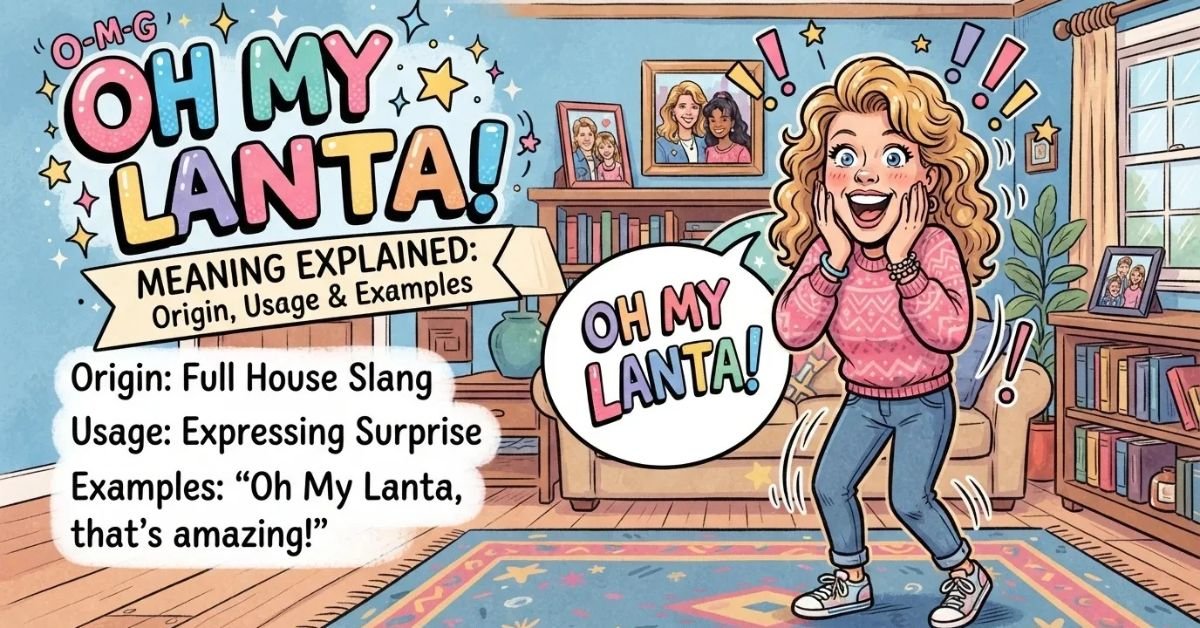
Have you ever heard someone say “Oh my Lanta!” after seeing something surprising or unbelievable? This playful expression might sound unusual, but it carries a simple message. People use it to show surprise, excitement, shock, or disbelief without relying on strong language. It also has a memorable connection to American television, particularly the popular sitcom Full House.
The phrase remains recognizable among television fans and people who enjoy lighthearted expressions. But what does it actually mean, where did it come from, and when should you use it? Understanding its background makes the expression even more interesting. This guide explains its meaning, definition, history, television connection, emotional tone, everyday examples, and similar expressions so you can understand how Americans use it naturally.
Quick Answer
Oh my lanta is a playful, informal expression used to show surprise, excitement, shock, or disbelief. It works as a mild, family-friendly alternative to expressions like Oh my God. The phrase is especially associated with DJ Tanner from the American sitcom Full House and its sequel Fuller House. It doesn’t have a separate literal meaning in everyday conversation. Instead, people use it to react to unexpected, exciting, funny, or unbelievable situations.
What Does Oh My Lanta Mean?
The expression describes an emotional reaction to something unexpected, exciting, or surprising. When someone says it, they’re usually showing that a situation caught them off guard.
Think of it as another way to say Oh my gosh or Oh my goodness. The wording sounds unusual, which gives it a humorous and memorable personality.
For example, imagine your friend tells you they’ve won a vacation to Hawaii. You might respond:
- Oh my lanta! That’s amazing!
- Oh my lanta, I can’t believe you did that!
- Oh my lanta! This cake looks delicious!
The meaning depends on the situation and the speaker’s tone. However, it generally communicates a lighthearted reaction rather than anger or frustration.
Oh My Lanta Definition
Oh my lanta definition: A casual, humorous exclamation that people use to express surprise, excitement, shock, or disbelief.
It’s an informal expression rather than a traditional dictionary phrase with a precise literal definition.
The expression also fits into a language category called euphemisms. A euphemism replaces a stronger or potentially uncomfortable expression with softer wording.
For example, people sometimes choose:
- Oh my gosh instead of Oh my God.
- Goodness gracious instead of a stronger exclamation.
- Oh my lanta as a playful alternative.
These expressions help people communicate strong reactions while keeping their language friendly and appropriate.
Everyday Examples
The easiest way to understand this expression is to see how people use it in ordinary situations.
Here are some natural examples:
- Unexpected news: Oh my lanta! You got the job?
- Exciting moments: Oh my lanta, we’re finally going on vacation!
- Delicious food: Oh my lanta! This pizza tastes incredible.
- Funny situations: Oh my lanta, I can’t stop laughing.
- A surprising achievement: Oh my lanta! You finished the entire project?
You can also use it in casual text messages.
Example conversation:
Friend 1: I just bought tickets to our favorite band’s concert!
Friend 2: Oh my lanta! That’s going to be amazing!
In this conversation, the expression communicates excitement and surprise. It makes the response sound more playful and enthusiastic.
Why People Say Oh My Lanta Instead of Swearing
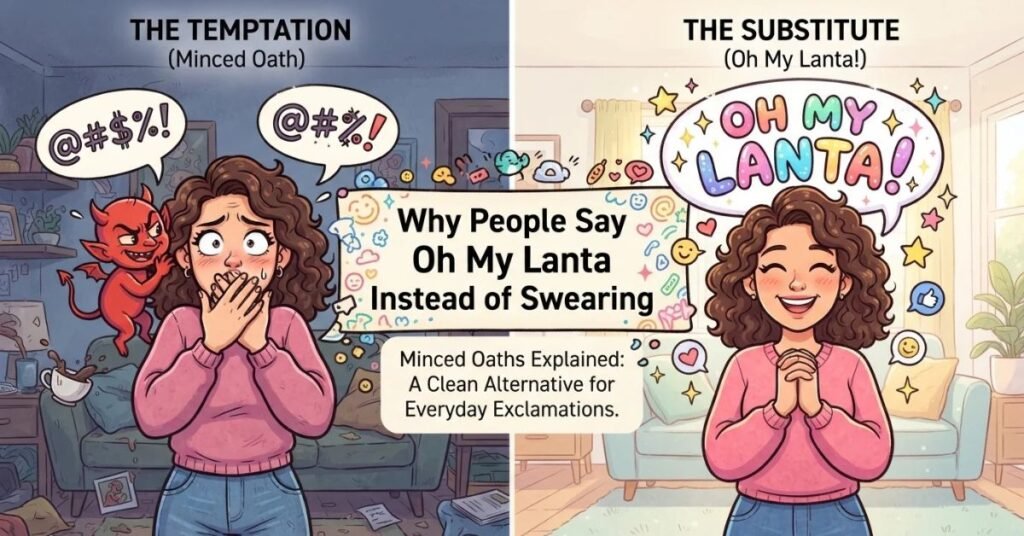
People often choose softer expressions when they want to communicate strong emotions without using offensive language.
Oh my lanta provides a lighthearted way to react when something surprises you. Its unusual wording also adds personality to everyday conversations.
A Polite Way to Express Surprise
Not everyone feels comfortable using strong language around children, family members, coworkers, or strangers. That’s where clean expressions become useful.
Consider these situations:
- Family conversations: You can use it around children without introducing harsh language.
- Workplace humor: It can make a casual reaction sound friendly.
- Friendly conversations: It adds humor when someone shares unexpected news.
- Television and entertainment: It fits characters who use playful, clean dialogue.
The expression isn’t necessary in every situation. However, it offers a fun alternative when you want your reaction to sound enthusiastic without being harsh.
Clean Language Alternatives That Feel Natural
If you enjoy using oh my lanta, several other expressions communicate similar feelings. Some sound more traditional, while others feel casual and playful.
Here are a few alternatives:
- Oh my gosh: A common way to express surprise.
- Oh my goodness: A gentle and polite reaction.
- Oh my word: A slightly old-fashioned expression of disbelief.
- Goodness gracious: A traditional phrase used to show surprise.
- Oh dear: A mild reaction to unexpected or unfortunate news.
- Oh my: A short expression of astonishment.
For example, if your friend shares exciting news, you could say Oh my goodness! or Oh my lanta!
Both communicate excitement, but the second sounds more humorous and distinctive.
The Real Origin of Oh My Lanta
Where does oh my lanta come from? The expression is closely connected to American entertainment and the popular sitcom Full House.
The phrase gained recognition through television dialogue, particularly its association with DJ Tanner. However, it’s more accurate to say the show popularized the expression rather than claim that television definitively invented it.
The wording may also remind people of Mylanta, a familiar antacid brand. Some discussions about the expression suggest that this resemblance may explain its unusual construction. However, a definite historical origin has not been firmly established.
What makes the phrase memorable is its catchy sound and playful tone. Television helped introduce it to a much wider audience, and fans continued using it outside the show.
Oh My Lanta Full House Connection
The connection between this expression and Full House is one of its most recognizable cultural associations.
The American sitcom introduced viewers to a family whose conversations included several memorable catchphrases. Oh my lanta became associated with DJ Tanner, played by Candace Cameron Bure.
DJ Tanner and the Catchphrase Effect
DJ Tanner uses the expression as a reaction to surprising or exciting moments.
Her delivery gives the phrase a playful personality. Instead of sounding serious or dramatic, it communicates surprise in a humorous way.
The expression became even more recognizable through Fuller House, where the character continued using it.
This connection helped establish oh my lanta as a recognizable television catchphrase, especially among fans of the original series.
Cultural Impact
The expression became associated with several aspects of American television culture:
- A memorable sitcom catchphrase.
- Clean and family-friendly humor.
- DJ Tanner’s television personality.
- Nostalgic references to Full House.
- A playful alternative to stronger expressions.
For longtime viewers, hearing the phrase can bring back memories of the Tanner family’s funny conversations.
How Sitcoms Turn Lines Into Language
Television doesn’t just entertain people. It can also influence the way they speak.
When viewers hear a memorable phrase repeatedly, they may start using it in their own conversations. Catchphrases become especially popular when they’re easy to remember and connected to entertaining characters.
Several factors help a television expression spread:
- Repetition: Characters use memorable expressions throughout a show.
- Personality: A catchphrase becomes connected to a recognizable character.
- Humor: Funny wording makes people want to repeat it.
- Audience connection: Viewers remember phrases associated with favorite scenes.
- Social sharing: Fans repeat catchphrases through conversations and online posts.
Oh my lanta demonstrates how a television expression can become recognizable beyond its original entertainment setting.
Oh My Lanta as 90s Slang
The expression has a strong connection to 1990s television nostalgia because of its association with Full House.
However, its history deserves a little clarification. The phrase appeared in the original sitcom, but its use became particularly recognizable through the character’s later appearances and the Fuller House revival.
The 1990s were full of memorable television expressions. Family sitcoms often used creative language to keep dialogue funny and suitable for different age groups.
Other recognizable examples include:
- How rude!
- Have mercy!
- Cut it out!
- You got it, dude!
These expressions helped give sitcom characters their individual personalities. Oh my lanta fits naturally into that tradition of playful television language.
Emotional Tone Behind the Phrase
Although the words sound unusual, the emotional message is easy to understand. The expression generally communicates a strong reaction without creating a serious or aggressive atmosphere.
What the Phrase Communicates
Depending on the situation, it can express:
- Surprise: Something happened unexpectedly.
- Shock: A piece of news feels unbelievable.
- Excitement: Something wonderful just happened.
- Humor: A situation seems funny or ridiculous.
- Disbelief: You find something difficult to believe.
For example, someone might say Oh my lanta! after discovering that their friend bought a new house.
What It Doesn’t Communicate
The expression doesn’t normally communicate:
- A serious insult.
- Strong anger.
- A threat.
- An offensive statement.
- A formal announcement.
Your voice and the surrounding conversation still matter. A sarcastic delivery can change the emotional effect of almost any expression.
Similar Expressions and How They Compare
Several English expressions serve the same purpose as oh my lanta. However, they differ in emotional strength, personality, and formality.
Tone Comparison Table
| Expression | Emotion Strength | Formality | Usage Context |
|---|---|---|---|
| Oh my lanta | Mild | Informal | Playful conversations |
| Oh my gosh | Mild | Neutral | Everyday reactions |
| Oh my goodness | Very mild | Polite | Family-friendly situations |
| Oh my word | Mild | Informal | Surprise and disbelief |
| Goodness gracious | Mild | Neutral | Traditional expressions |
| Oh my God | Strong | Informal | Emotional reactions |
The best choice depends on your audience and the situation.
For instance, Oh my goodness sounds more traditional and polite. Oh my lanta feels more playful and carries a stronger connection to television nostalgia.
Is Oh My Lanta Still Used Today?
Yes, people still recognize and occasionally use the expression. However, it isn’t among the most common everyday slang phrases.
Its popularity is closely connected to nostalgia, television references, and playful conversations.
You may encounter it in:
- Conversations between Full House fans.
- Social media posts and comments.
- Funny reaction captions.
- Nostalgic discussions about 1990s television.
- Family-friendly entertainment.
Some people use it because they remember DJ Tanner. Others simply enjoy how unusual and cheerful it sounds.
Although modern texting slang changes quickly, recognizable television expressions can remain part of popular culture for years.
Oh My Lanta in Internet and Meme Culture
The internet gives older expressions another opportunity to reach new audiences.
Oh my lanta can appear in humorous posts, reaction captions, and conversations about classic television. Its unusual wording makes it suitable for funny situations where ordinary expressions feel less entertaining.
For example:
- Oh my lanta, Monday came around quickly!
- Oh my lanta! That puppy is adorable.
- Oh my lanta, I wasn’t expecting that ending!
People may also use the phrase alongside nostalgic pictures, sitcom clips, and references to DJ Tanner.
Its online use isn’t limited to one platform. Anyone who enjoys playful language can include it in a post or casual message.
Common Misunderstandings About Oh My Lanta
Because the phrase sounds unusual, people sometimes misunderstand its meaning and background.
Here are three important points to remember.
It’s Not a Religious Expression
Although it resembles expressions such as Oh my God, it doesn’t directly refer to a religious figure or belief.
People generally use it as a lighthearted reaction to something surprising or exciting.
It Didn’t Originate Exclusively From a Modern Meme
The expression has a television history that goes back to the original Full House era. Online memes helped keep it recognizable, but they weren’t responsible for its initial television association.
It Doesn’t Have a Literal Meaning
The word lanta doesn’t have an established independent meaning within this expression.
Instead, the complete phrase works as an exclamation. Understanding the entire expression is more useful than trying to translate each word separately.
When Not to Use Oh My Lanta
Although the expression is generally harmless, it doesn’t fit every conversation.
Its playful personality makes it better suited to informal communication than serious or highly professional situations.
Avoid using it when:
- Writing formal academic assignments.
- Preparing official business documents.
- Discussing serious personal problems.
- Communicating during emergencies.
- Delivering important professional announcements.
However, it works naturally in friendly conversations, humorous storytelling, family discussions, and casual messages.
Always consider your audience. An expression that makes your friends laugh might sound out of place in a formal meeting.
Evolution of Oh My Lanta Over Time
The expression has moved through different stages of popularity. Its journey shows how television and online culture can keep familiar phrases alive.
- Early informal use: The phrase existed outside its later television popularity, although its exact origin remains uncertain.
- Original television era: Full House connected it with DJ Tanner and introduced it to sitcom audiences.
- Television revival: Fuller House gave the expression renewed visibility.
- Modern internet culture: Fans continue using it in memes, nostalgic discussions, and humorous conversations.
Its journey isn’t simply about slang becoming popular. It’s also about how entertainment helps certain expressions stay memorable.
Why Oh My Lanta Still Has Cultural Value
Some expressions disappear after a television show ends. Others remain recognizable because they become connected to memorable characters and entertaining moments.
Oh my lanta has cultural value because it represents a particular style of family-friendly television humor.
It also reminds viewers of the way sitcoms influence everyday language. People don’t always repeat catchphrases because they need them. Sometimes they simply enjoy the personality behind the words.
The phrase remains useful for anyone who wants a cheerful reaction without using harsh language. Its unusual sound also makes it stand out among ordinary expressions.
Whether you remember it from Full House or discovered it online, the phrase carries a little piece of American television nostalgia.
FAQs
What does lanta mean in slang?
Lanta has no established independent slang meaning in this expression. It’s part of the complete phrase oh my lanta.
Where did the phrase Oh My Lanta come from?
The expression became recognizable through American television, particularly Full House, where DJ Tanner used it.
What does Oh My Lanta mean on Urban Dictionary?
It generally refers to a humorous alternative to Oh my God, expressing surprise, excitement, or disbelief.
Who said Oh My Lanta?
DJ Tanner, played by Candace Cameron Bure, is strongly associated with the expression in Full House and Fuller House.
Is Oh My Lanta a bad word?
No. It’s a mild, family-friendly expression that people use to communicate surprise or excitement without offensive language.
Conclusion
The oh my lanta meaning is simple: it’s a playful expression used to communicate surprise, excitement, shock, or disbelief. Rather than carrying a literal definition, it works as a friendly exclamation in everyday conversations. Its connection to DJ Tanner and the television sitcom Full House helped make it recognizable among American audiences. Today, people still use it in humorous conversations, nostalgic references, and social media posts.
Whether you’re watching a classic sitcom or chatting with friends, oh my lanta can add personality to your reaction. It’s a clean alternative to stronger expressions and works particularly well in lighthearted situations. Remember that context and tone matter when choosing any informal phrase. The next time something surprises you, try using this cheerful expression. You might even make someone smile while introducing them to a memorable piece of television slang.

Abu Bakar is a passionate writer with 4 years of experience exploring words and ideas. He runs an engaging blog focused on the meaning niche, where he dives deep into the origins, interpretations, and insights behind everyday terms. He loves making complex concepts simple and interesting for his readers. His curiosity drives him to uncover hidden stories and meanings that spark thought and conversation.