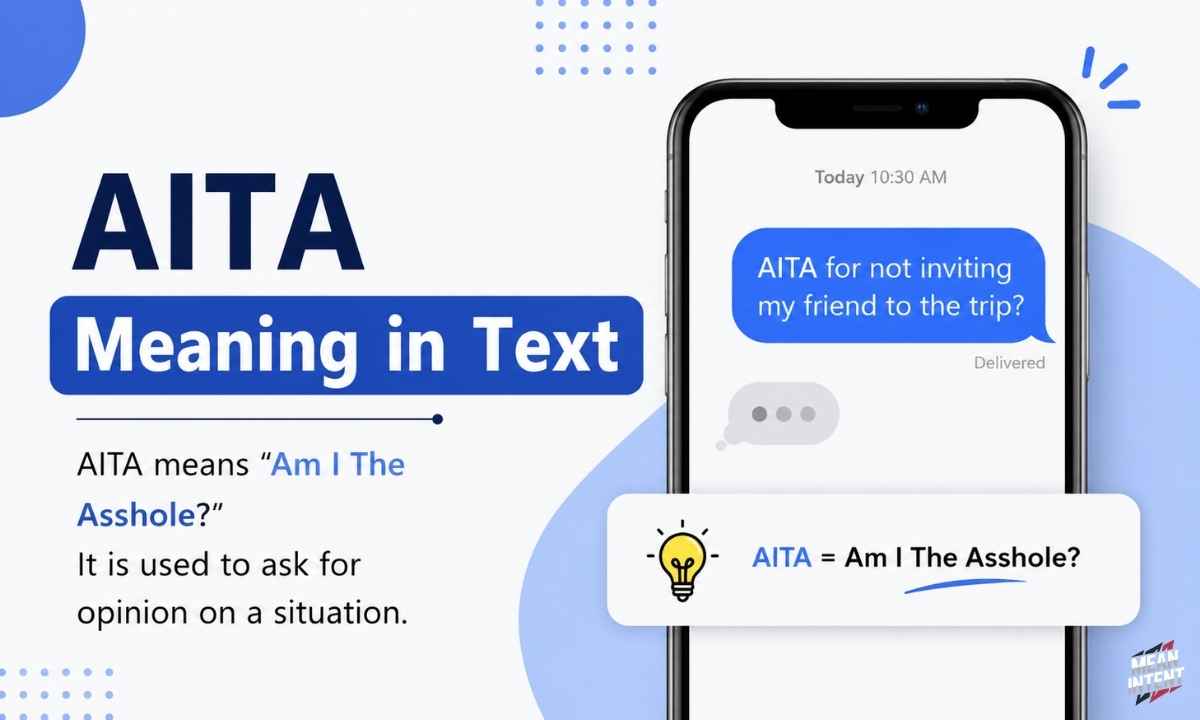
If you’ve scrolled through Reddit, TikTok, or a group chat lately, you’ve probably seen someone type “AITA” before spilling a messy story. It shows up in captions, comments, and even casual texts between friends. But what does AITA actually mean, and why has it become one of the most recognizable acronyms on the internet?
This guide breaks down the full meaning of AITA, where it came from, how people use it across different platforms, and why the format has become such a cultural phenomenon.
What Does AITA Mean?
AITA stands for “Am I The Asshole?” It’s a question people ask when they want an honest, outside opinion on whether they behaved badly in a specific situation.
Core Definition:
- AITA = Am I The Asshole
- Used to ask for judgment on personal behavior
- Typically followed by a story explaining the conflict
- Common on Reddit, but now used everywhere online
People use AITA when they’re unsure if they overreacted, said something unfair, or handled a situation the wrong way. Instead of asking a friend directly, they ask strangers online for an unbiased take.
Origin and History of AITA
AITA started as a subreddit called r/AmItheAsshole, created in 2013. The idea was simple: users post a real-life conflict, and the community votes on who was in the wrong.
The subreddit grew slowly at first, but by the late 2010s it had exploded into one of Reddit’s most popular communities, with millions of members. Its success came from a simple formula — relatable drama, clear judgment, and an active comment section full of opinions.
As the format spread, “AITA” stopped being just a subreddit name. It became shorthand people use anywhere they want a judgment call on their behavior — texts, tweets, TikTok captions, and more.
The Complete AITA Verdict System
Every AITA post gets judged using a set of standard verdict abbreviations. These verdicts help sort responses quickly and are a big reason the format works so well for engagement.
| Verdict | Meaning | What It Signals |
| YTA | You’re The Asshole | You were in the wrong |
| NTA | Not The Asshole | You did nothing wrong |
| ESH | Everyone Sucks Here | Both sides behaved badly |
| NAH | No Assholes Here | Nobody did anything wrong |
| INFO | Not Enough Info | More details are needed to judge |
When Each Verdict Gets Used:
- YTA — when the poster clearly caused or escalated the conflict
- NTA — when the poster’s actions were reasonable given the situation
- ESH — when both parties made mistakes, even if one is worse
- NAH — when it’s simply a misunderstanding or bad timing, not bad behavior
- INFO — when key facts are missing to form a fair judgment
This system gives structure to what could otherwise be chaotic arguments, which is part of why AITA content is so easy to consume and share.
Real AITA Examples Across Different Situations
Seeing AITA in action makes the format easier to understand. Here are some short examples across everyday contexts.
Example 1: Family Conflict
“AITA for not attending my sister’s wedding because it was on the same day as my final exam?”
Example 2: Friend Group Drama
“AITA for telling my friend group I don’t want to split the bill evenly since I only had a salad?”
Example 3: Workplace Situation
“AITA for reporting my coworker for taking credit for my project in front of our manager?”
Example 4: Everyday Decision
“AITA for refusing to switch seats on a flight so a family could sit together?”
Example 5: Relationship Conflict
“AITA for canceling date night because I was too tired after work?”
Example 6: Casual Joking Use
“AITA for eating the last slice of pizza even though I labeled it ‘mine’ in the fridge?”
Example 7: Text Conversation
Friend: “I told him I wasn’t coming to his party.” You: “AITA?” Friend: “Kind of, ngl.”
These examples show how flexible AITA is — it works for serious dilemmas and lighthearted jokes alike.
AITA Meaning Japanese?
AITA isn’t a native Japanese term. It’s an English-language acronym that has been adopted by online communities worldwide, including in Japan, mainly through Reddit translations and social media reposts. There’s no separate Japanese meaning — it’s used and understood the same way globally.
What does AITA mean in German?
Similarly, AITA has no distinct meaning in German. German internet users who engage with Reddit or English-language social media use the same acronym and meaning: “Am I The Asshole?” It’s been absorbed into internet slang rather than translated.
What does AITA mean in Spanish slang?
In Spanish-speaking online spaces, AITA keeps its original English meaning. Some communities use direct translations like “¿Soy yo el idiota?” in casual conversation, but the acronym itself remains AITA, borrowed straight from English internet culture.
What does AITA mean in English?
In English, AITA is used exactly as intended: a direct question asking whether the speaker behaved unfairly or unreasonably in a situation they’re describing. It’s informal, blunt, and designed to get quick, honest feedback.
ESH Meaning AITA
ESH stands for “Everyone Sucks Here.” It’s one of the five core verdicts in the AITA system, used when multiple people involved in a conflict share the blame, even if their reasons or actions weren’t equally bad. It’s a nuanced middle ground between full blame and no blame at all.
How AITA Is Used Beyond Reddit?
While Reddit is home base, AITA culture has spread across nearly every major platform, each with its own twist.
Used in captions and story polls asking followers to vote NTA or YTA on a personal situation.
TikTok
One of the biggest hubs for AITA content now. Creators narrate their story on camera and ask viewers to judge in the comments.
Twitter and X
Short, punchy AITA threads go viral quickly, often sparking huge reply debates.
WhatsApp and iMessage
Used casually between friends, like a shorthand for “did I mess up?”
Snapchat
Common in captions on personal story posts, often paired with reaction polls.
Discord
Used in community servers where members post dilemmas for group judgment in real time.
| Platform | Common Use |
| Original long-form storytelling and voting | |
| TikTok | Video storytelling with comment judgments |
| Captions and story polls | |
| Twitter/X | Short viral threads |
| Texting apps | Casual one-on-one use between friends |
| Discord | Real-time group discussions |
The Psychology Behind Why People Love AITA
AITA isn’t just entertainment — it taps into real psychological needs.
The Need for Validation
People want confirmation that their actions were reasonable, especially after a stressful conflict.
The Appeal of Judgment
Humans are naturally drawn to evaluating right and wrong, and AITA turns that instinct into a game.
Moral Clarity in a Complex World
Real-life conflicts are messy. AITA simplifies them into clear verdicts, which feels satisfying.
Connection Through Shared Experience
Reading similar stories helps people feel less alone in their own conflicts.
Safe Space for Moral Learning
Commenters get to practice ethical reasoning without any real-world consequences.
Why AITA Went Viral So Quickly
AITA succeeded because it combined storytelling, drama, and community judgment into one addictive format. It requires no special skills to participate — anyone can post a story or vote NTA/YTA. The clear verdict system also made it easy to skim, share, and discuss, which fueled rapid growth across platforms beyond Reddit.
How to Write a Good AITA Post?
- Start with a summary of the conflict
- Include relevant background details, not just your side
- Be honest, even about the parts that make you look bad
- Avoid dramatizing or leaving out key facts
- End with a clear question: “So, AITA?”
What NOT to Do When Using AITA
- Don’t leave out important context to make yourself look better
- Don’t post fake stories just for engagement
- Don’t get defensive if the verdict isn’t in your favor
- Don’t use it to publicly shame someone without their consent
AITA in Meme Culture
AITA has inspired countless memes, parody posts, and exaggerated “obviously YTA” stories used purely for comedy. It’s now a recognizable internet trope, often referenced even outside of actual moral dilemmas — a shorthand for “here comes a dramatic story.”
AITA Variations You Should Know
| Variation | Full Meaning | How It’s Used |
| WIBTA | Would I Be The Asshole | Asked before doing something, to judge a future decision |
| AITAH | Am I The Asshole (alternate community) | Similar to AITA but with fewer posting restrictions |
| TIFU | Today I F***ed Up | Used to confess a mistake rather than ask for judgment |
| AITA | Am I The Asshole | Used to judge a past action or decision |
AITA vs Similar Internet Formats
| Format | Purpose |
| AITA | Judgment on past behavior |
| WIBTA | Judgment on a future decision |
| TIFU | Confession of a personal mistake |
| Relationship advice threads | Seeking guidance, not just judgment |
Quick Reference Summary
| Key Point | Detail |
| Full Form | AITA = Am I The Asshole |
| Verdicts | YTA, NTA, ESH, NAH, INFO |
| Origin | Started on Reddit in 2013 |
| Platforms | Now used across TikTok, Instagram, texting, and more |
| Language | Meaning stays the same across languages worldwide |
Frequently Asked Questions
What does AITA stand for?
AITA stands for “Am I The Asshole,” a question used to ask if someone behaved badly in a situation.
What does NTA mean in AITA?
NTA means “Not The Asshole,” meaning the poster didn’t do anything wrong.
What does YTA mean?
YTA means “You’re The Asshole,” indicating the poster was at fault.
Is AITA only used on Reddit?
No, it’s now common on TikTok, Instagram, Twitter, and in everyday texting.
What does ESH mean?
ESH means “Everyone Sucks Here,” used when multiple people share the blame.
Does AITA mean something different in other languages?
No, it keeps the same English meaning across German, Spanish, Japanese, and other language communities online.
Conclusion
AITA has grown from a niche subreddit into a global internet language for judging personal conflicts. Its simple verdict system — YTA, NTA, ESH, NAH, and INFO — makes it easy for anyone to understand and join the conversation, no matter the platform. Whether it’s a text between friends or a viral TikTok story, AITA taps into something universal: our desire to know if we did the right thing. And that’s exactly why it isn’t going away anytime soon.

John Marvel is a passionate writer with 4 years of experience exploring words and ideas. He runs an engaging blog focused on the meaning niche, where he dives deep into the origins, interpretations, and insights behind everyday terms. John loves making complex concepts simple and interesting for his readers. His curiosity drives him to uncover hidden stories and meanings that spark thought and conversation.