If you’ve seen “GMFU” pop up in a text, a comment section, or a TikTok caption and had no idea what it meant, you’re not alone. Slang terms like this spread fast online, and they often carry way more emotion than their four letters suggest.
This guide breaks down exactly what GMFU means, where it comes from, how people actually use it in 2026, and how to respond when someone drops it on you. No jargon, no guesswork — just a clear, simple explanation.
What Does GMFU Mean?
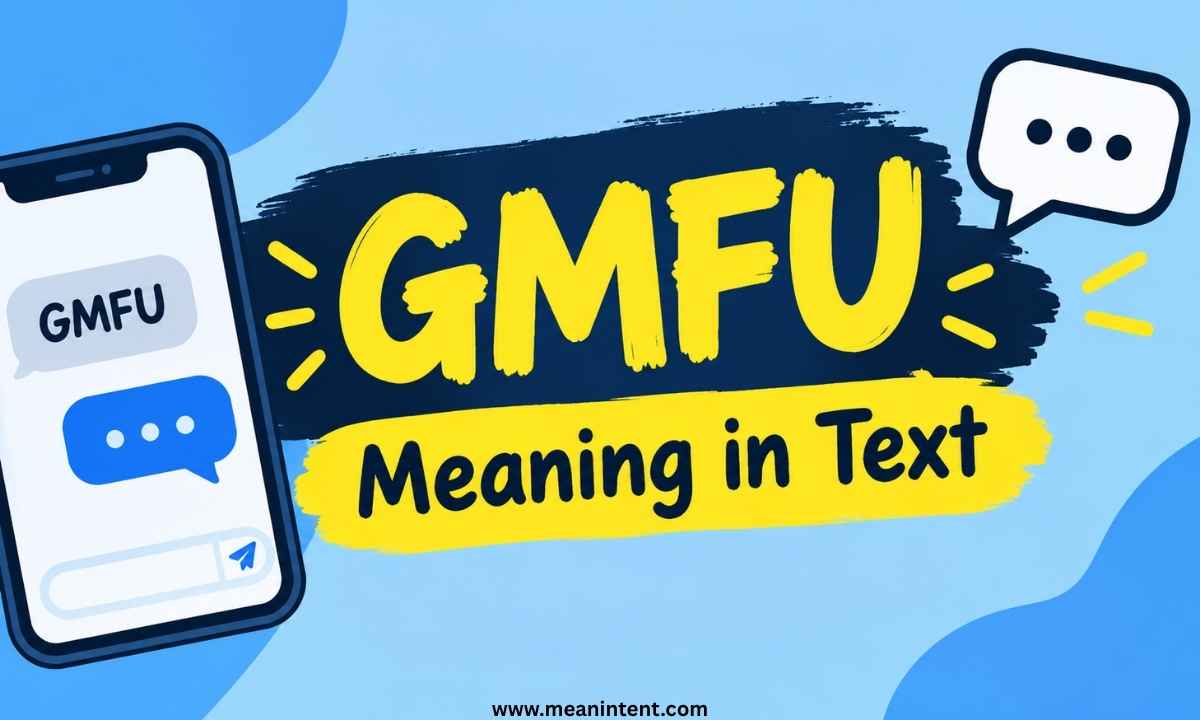
GMFU stands for “Got Me F*ed Up.”** It’s internet and texting slang used to express strong emotion — usually shock, disbelief, frustration, or annoyance — toward something someone said or did.
At its core, GMFU is a reaction. It tells the other person: what you just said or did is not okay with me, and I’m not going to just let it slide.
The phrase includes an implied swear word, which is why it’s almost always written as an abbreviation rather than spelled out, especially in casual texts, comments, and captions.
Simple Meaning (In Easy Words)
Strip away the internet-speak, and GMFU basically means one of these things, depending on tone:
- “You’ve got to be kidding me.”
- “That’s not okay.”
- “I can’t believe you just said/did that.”
- “You’re testing my patience right now.”
It’s less a definition and more a vibe. Someone typing GMFU is telling you their emotional reaction hit hard enough that a normal response wasn’t strong enough.
Where Is GMFU Used?
GMFU shows up across pretty much every corner of digital communication, though the tone shifts depending on the platform.
- Text messages – Reacting to something a friend, partner, or family member said
- Instagram/TikTok comments – Reacting to shocking, bold, or funny content
- Twitter/X – Quick, dramatic reactions to news or posts
- Gaming chats – Calling out a teammate or reacting to a wild play
- Dating apps – Reacting to a bold, cringe, or unexpected message
It’s rarely used in formal settings. You won’t see GMFU in a work email or a professional Slack channel — it’s built for casual, fast-paced conversation where tone is carried by context rather than punctuation.
Why Do People Use GMFU Instead of Just Saying They’re Upset?
There’s a reason slang like this catches on instead of people just typing “I’m upset” or “that’s not okay.”
- It’s faster. Four letters say more than a full sentence, especially mid-conversation.
- It softens the swearing. Abbreviating the phrase keeps the emotional punch without fully spelling out profanity.
- It signals internet fluency. Using current slang correctly is its own kind of social currency, especially among younger users.
- It can flex between serious and playful. The same term can mean genuine anger or a joking reaction, depending on who’s using it and how.
- It creates in-group shorthand. Friends who already know the tone behind GMFU don’t need extra explanation — the abbreviation does the emotional work instantly.
Basically, GMFU lets people express a strong reaction without slowing the conversation down or sounding overly dramatic in full sentences.
GMFU Meaning From a Girl
Context matters here more than gender, but when a girl uses GMFU in a text or comment, it typically signals one of these:
- She’s genuinely annoyed or caught off guard by something.
- She’s being playfully dramatic with a friend (not serious at all).
- She’s calling out something she finds disrespectful or out of line.
- She’s reacting with humor to something ridiculous a guy said, especially in flirty or dating conversations.
The key is tone and history. If it’s paired with laughing emojis or follows a joke, it’s almost certainly lighthearted. If it comes after a serious conversation or a real disagreement, it’s meant with actual frustration.
Real-Life Examples (With Explanations)
Example 1:
“He said he forgot our anniversary again… GMFU.”
This is genuine frustration. The person is expressing real disappointment, not humor.
Example 2:
“Bro just said pineapple belongs on pizza AND in tacos. GMFU 💀”
This is playful. The laughing emoji signals it’s a joke, not a real conflict.
Example 3:
“My mom canceled my weekend plans last minute. GMFU right now.”
Mild frustration directed at an inconvenient situation, not necessarily anger at the person.
Example 4 (gaming chat):
“You threw that whole match. GMFU.”
Used to call out a teammate’s mistake, somewhere between joking and genuinely annoyed.
Example 5 (dating app):
“He really opened with ‘send pics’? GMFU.”
Reacting to something bold, cringe, or presumptuous with a mix of disbelief and humor.
GMFU vs Similar Terms (Comparison)
GMFU isn’t the only acronym built around strong reactions. Here’s how it stacks up against similar slang:
| Term | Meaning | Tone |
| GMFU | Got Me F***ed Up | Shock, frustration, disbelief |
| SMH | Shaking My Head | Disappointment, disapproval |
| WTF | What The F*** | Confusion, shock |
| FR FR | For Real, For Real | Emphasis, agreement |
| IDGAF | I Don’t Give A F*** | Indifference |
| STFU | Shut The F*** Up | Disbelief, playful shock |
The main difference: GMFU is specifically about being personally affected by something — it implies the situation directly upset or shocked you, rather than just being a general reaction to news or events.
When Should You Use GMFU?
GMFU works best in casual, informal settings where the relationship already allows for blunt language. Good moments to use it:
- Texting close friends about something surprising or annoying
- Reacting to relatable content on social media
- Venting (lightly) about a minor inconvenience
- Joking around in group chats
Avoid using it:
- In professional emails, meetings, or work chats
- With people you don’t know well, since tone can be misread
- In situations where the topic is genuinely serious (grief, health issues, real conflict) — it can come across as dismissive
How To Respond When Someone Uses GMFU
Not sure how to reply when someone sends you GMFU? It depends on the context:
- If it seems playful: Match the energy with humor — a laughing emoji or a joking comeback works fine.
- If it seems genuinely upset: Ask what happened. A simple “what’s wrong?” shows you’re taking their reaction seriously.
- If it’s directed at you: Acknowledge it. Don’t ignore it — ask what specifically upset them so you can clear up any misunderstanding.
- If you’re unsure of the tone: It’s always fine to ask, “Wait, are you actually mad or joking?” Slang can be ambiguous over text, and clarifying avoids unnecessary drama.
Common Misunderstandings About GMFU
A few mix-ups happen often with this term:
- Thinking it’s always angry. It’s frequently used jokingly among friends.
- Assuming it’s a positive phrase. It isn’t — even in playful use, it implies something negative or surprising happened.
- Confusing it with GTFO or STFU. These are related in tone but mean different things (leaving vs. quieting down vs. being upset).
- Using it in professional spaces. Because of the implied profanity, it’s not appropriate outside casual conversation.
Context — who’s saying it, the platform, and what came before it — almost always clears up any confusion.
A Quick Look At Where GMFU Came From
The phrase “got me f***ed up” has roots in urban slang and has appeared in rap lyrics since at least the mid-2000s. As texting and social media culture grew, users shortened the phrase into the acronym GMFU, following the same pattern as older abbreviations like GTFO and STFU.
The term picked up traction on early social platforms and later saw a resurgence through Twitter, Instagram, and TikTok, where quick, punchy reactions perform well in comments and captions. Several songs have even used “GMFU” as a title over the years, letting artists reference the phrase without spelling out the profanity directly.
Pro Tips For Using GMFU The Right Way
- Read the room first. Make sure the conversation’s tone matches before dropping it in.
- Pair it with emojis for clarity. A 💀 or 😂 signals joking; no emoji at all can read as more serious.
- Don’t overuse it. Like most slang, it loses impact if it’s in every other message.
- Know your audience. Older relatives, coworkers, or new acquaintances may not know the term or may find it inappropriate.
- Use it to express, not attack. It works best as a reaction to a situation, not as a direct insult toward someone.
Frequently Asked Questions
What does GMFU mean in text?
GMFU means “Got Me F***ed Up,” used to express shock, frustration, or disbelief.
Is GMFU always negative?
Mostly, but it’s often used jokingly among friends rather than as a serious insult.
Can I use GMFU at work?
No, it’s too casual and contains implied profanity, so it’s best kept out of professional settings.
Does GMFU mean the same thing on every platform?
Yes, the meaning stays consistent, though the tone can shift from serious to playful depending on context.
What does it mean when a girl says GMFU?
It usually means she’s upset, surprised, or reacting strongly — tone depends on the conversation.
Is GMFU rude?
It can come across as rude if used aggressively, but among friends it’s typically harmless.
What’s a good way to respond to GMFU?
Match the tone — joke back if it’s playful, or ask what happened if it seems genuine.
Conclusion
GMFU is one of those slang terms that packs a lot of emotional weight into just four letters. Whether it’s used to vent about something annoying, react to shocking content, or joke around with friends, understanding the tone behind it is the real key to using — and responding to — it correctly.
Now that you know what GMFU means, where it came from, and how to use it appropriately, you’ll never be left confused the next time it shows up in your messages.

John Marvel is a passionate writer with 4 years of experience exploring words and ideas. He runs an engaging blog focused on the meaning niche, where he dives deep into the origins, interpretations, and insights behind everyday terms. John loves making complex concepts simple and interesting for his readers. His curiosity drives him to uncover hidden stories and meanings that spark thought and conversation.